A practical guide for dogs and cats with food sensitivities
If your dog or cat is scratching, obsessively licking their paws, or seems to turn their nose up at their favorite meal, you’ve probably heard the terms “hypoallergenic” and “chicken-free.” But what exactly do they mean? And what about food intolerances? Navigating this world can quickly feel like solving a puzzle. Understanding these concepts is essential to ensure the health and comfort of your furry pet. At Oven-Baked Tradition, we’ve developed hypoallergenic, chicken-free, and even vegan recipes to meet the specific needs of animals with food sensitivities or allergies. This guide will help you separate fact from fiction, recognize signs of intolerance, and choose the best food for your pet.

Allergies vs. Intolerance: Understanding the Difference
First, let’s clear up a common confusion: allergies and food intolerance are not the same thing. A hypoallergenic diet is formulated to reduce the risk of allergic reactions to common proteins and ingredients. At Oven-Baked Tradition, this means avoiding chicken, eggs, and certain grains known to cause irritation, such as wheat, corn, and soy. The goal is to minimize skin and digestive reactions in predisposed animals.
Food intolerance, on the other hand, does not always involve the immune system. It occurs when an animal has difficulty digesting a specific food, which can cause bloating, diarrhea, or digestive discomfort. Some intolerance can be specific to a particular ingredient, like lactose, and is not necessarily an allergy. This means an animal might tolerate some proteins but react to others, making careful observation and label reading crucial for selecting the right food.
Food Allergy vs. Intolerance in Dogs and Cats: Complete Comparison Table
| Food Intolerance | Food Allergy | |
|---|---|---|
| Definition | Inability to properly digest a nutrient. | An excessive immune system reaction to a nutrient. |
| Trigger | From the first exposure, caused by any ingredient (e.g., lactose, gluten). | After multiple exposures, triggered usually to proteins. |
| Involved Nutrients | Lactose, gluten, bovine proteins, and certain grains. | Common proteins: beef, chicken, corn, wheat. |
| Main Symptoms | Digestive: gas, bloating, diarrhea, vomiting, lethargy, skin patches. | Skin and digestive: itching, redness, hair loss, ear infections, discharge, digestive issues. |
| Severity | Skin and digestive: itching, redness, hair loss, ear infections, discharge, digestive issues. | Immune reaction that can become chronic and severe. |
What is a hypoallergenic recipe?
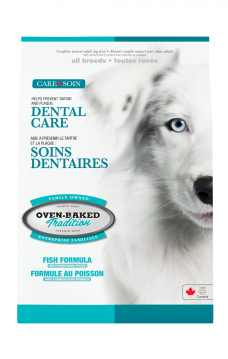
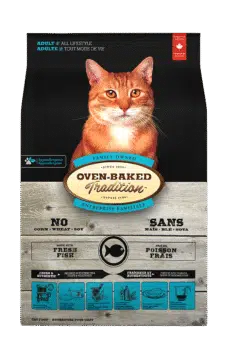
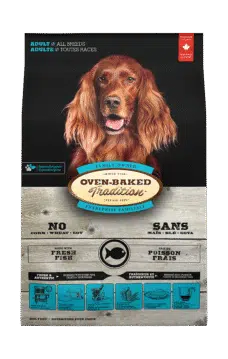
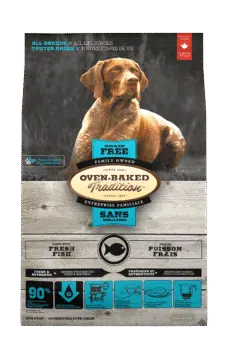
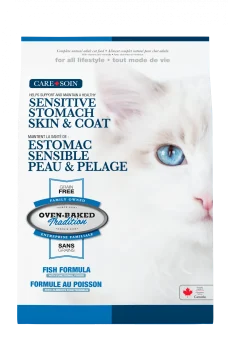
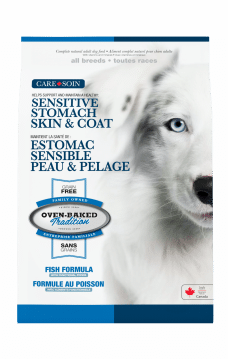
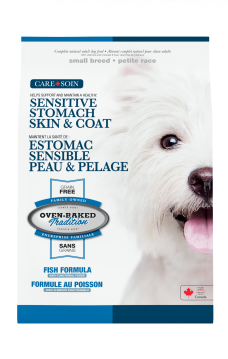
A hypoallergenic recipe is designed to be gentle on your pet’s body and skin. It relies on alternative proteins, such as duck or fish, and grains chosen for their digestibility, like barley, oats, rye, or brown rice. At Oven-Baked Tradition, we follow strict protocols to avoid cross-contamination. Each batch is scheduled according to allergen considerations, and our bakery is cleaned between productions. This ensures that hypoallergenic recipes remain safe for animals with food sensitivities. In short, these formulas are crafted to reduce allergy risk while staying delicious.
Oven-Baked Tradition offers a wide range of hypoallergenic recipes tailored to the needs of both dogs and cats, providing safe and nutritious solutions for pets with food sensitivities.

What does chicken-free mean?
The term “chicken-free” means exactly that: no chicken protein, meal, fat, or broth. This distinction is important because some animals are sensitive only to chicken but tolerate other ingredients perfectly. A chicken-free recipe is ideal for targeting a specific sensitivity. However, it does not automatically remove other allergens or irritants. Understanding this nuance allows you to choose the recipe that best matches your dog or cat’s specific needs.
Is vegan dog food a hypoallergenic alternative?
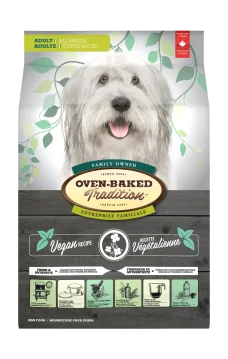
Vegan dog food can be a good option for dogs with severe food sensitivities, as it contains no animal-derived ingredients. To be safe and beneficial, a vegan recipe must be well balanced to prevent nutritional deficiencies.
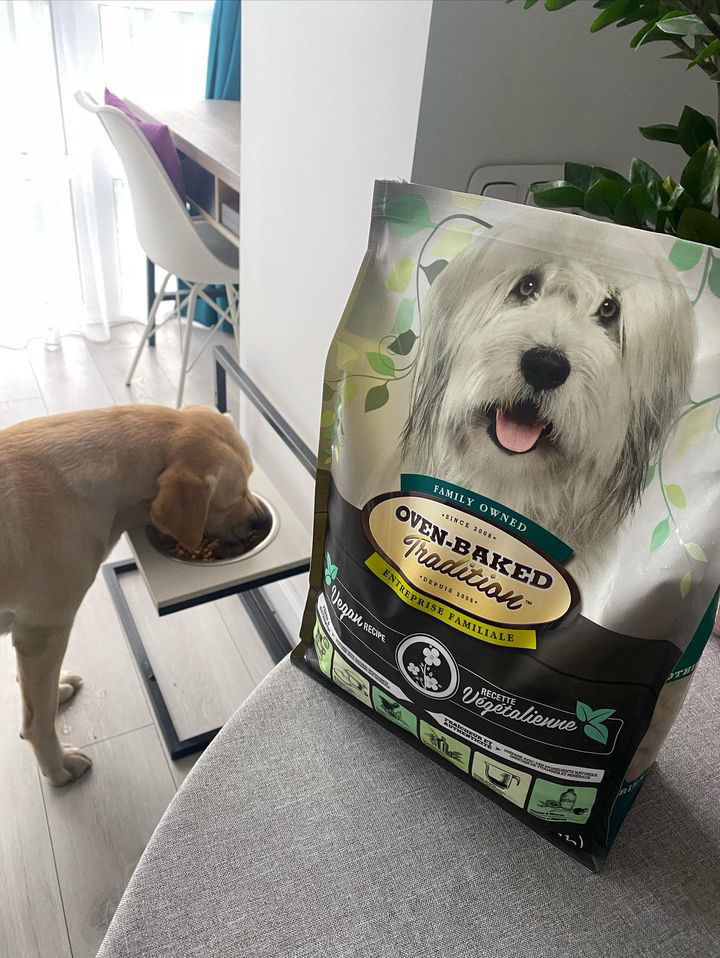
The Oven-Baked Tradition vegan recipe, available for all breeds and for small breeds, is complete and balanced, providing high-quality vitamins, minerals, and amino acids to ensure optimal nutrient bioavailability. It also contains organic hemp seeds and coconut oil to support skin and coat health. This product represents a great alternative for dogs suffering from severe food allergies or intolerances.
Detecting Signs of Intolerance or Allergy
Our fur babies can’t tell us, “My stomach hurts” or “This kibble itches,” but their behaviors speak for themselves. Persistent itching, excessive paw licking, redness, recurrent ear infections, digestive issues such as diarrhea or gas, or localized hair loss may indicate an intolerance or allergy. Observing these signs over several weeks helps identify patterns and make informed dietary choices. For cats, watch grooming habits too, as excessive grooming can be a subtle sign of discomfort.
We explore in detail the differences between seasonal and food allergies in dogs and cats in this blog article.
Allergy or intolerance: How to tell the difference
They might sound like synonyms, but your companion would probably say, “Not at all!” A food allergy is when your dog or cat’s immune system goes into superhero mode but fights the wrong enemy. Even a small bite can trigger itching, redness, or digestive upset because the body thinks the ingredient is dangerous. Food intolerance, on the other hand, is all about digestion. The immune system stays quiet, but the stomach or intestines struggle to process certain foods, causing bloating, gas, or mild diarrhea. Understanding this distinction is key; a hypoallergenic recipe mainly reduces allergy risks, while a diet for sensitivities focuses on easily digestible ingredients. Your pet doesn’t care about the difference, but you do!
If you would like to go further and better understand the differences between food allergies and food intolerances in dogs and cats, our dedicated blog article provides detailed explanations.
How to read a label effectively
Knowing how to read a label is essential to selecting the right hypoallergenic or chicken-free recipe. Ingredients are listed by weight, so the first items are what your pet consumes the most. For a hypoallergenic recipe, check that it does not contain chicken, eggs, or irritating grains, and ensure alternative proteins are clearly identified. For a chicken-free recipe, simply confirm that chicken and all derivatives are absent. At Oven-Baked Tradition, we commit to using only nourishing, functional ingredients with no filler grains, providing transparency and food safety. The way it should be.
Why Oven-Baked Tradition Offers These Recipes
Every animal is unique, and that’s exactly why we developed hypoallergenic and chicken-free recipes. Some dogs or cats tolerate chicken and standard grains perfectly, while others have multiple or specific sensitivities. Our goal is to provide a reliable, consistent range that meets real needs while keeping taste and quality intact. Our slow-baked process, rigorous cleaning protocols, and selection of functional ingredients ensure that our products remain safe and delicious for all pets.

Observe, understand, and enjoy the moments with your pet.
Caring for a dog or cat with food sensitivities isn’t a race; it’s a journey of observation, patience, and little discoveries every day. Understanding the difference between hypoallergenic formulas and chicken-free formulas allows you to support your pet, reduce discomfort, and improve quality of life. Beyond the labels and diets, it’s those moments of connection when they snuggle up after a meal they tolerate well or perform a little happy twirl because they feel light and comfortable that truly matter. With thoughtful, adapted food choices, every meal becomes a moment of shared well-being, and every purr or tail-wagging becomes a reward for your care. Feeding your animals is a mix of science, attention, love, and perhaps a little humor when they give you those pleading eyes like, “What’s this new flavor?!”
FAQ: You’re frequently asked questions about food allergies in pets
Hypoallergenic food for dogs and cats is formulated to reduce the risk of allergies by using alternative protein sources (such as duck or fish) and easy-to-digest grains (such as barley, oats, rye, and brown rice). At Oven-Baked Tradition, strict protocols are in place to prevent cross-contamination, ensuring safe and flavorful recipes for sensitive pets.
By comparison, a chicken-free recipe only excludes chicken in all its forms (meat, meal, fat, or broth). It is ideal for an animal specifically sensitive to chicken, but it does not prevent the inclusion of other allergens or irritants, as a hypoallergenic food does.
This distinction is important when choosing the recipe best suited to your dog’s or cat’s specific needs.
Need help choosing the perfect recipe for your companion? Contact our customer service team, our experts are here to help.
A food intolerance is the inability to properly digest a nutrient and can occur from the first exposure. The symptoms are mainly digestive: gas, bloating, diarrhea, vomiting, which can sometimes make the animal more lethargic. Observe these signs over several weeks to confirm a pattern.
A food allergy is an excessive immune system reaction to a protein that occurs after repeated exposure. Symptoms are often skin-related and inflammatory, such as persistent itching, redness, hair loss, recurrent ear infections, nasal or eye discharge, red eyes, and sometimes digestive issues. In cats, excessive grooming can be a subtle sign of discomfort.
Check the ingredient list, which is ordered by weight. For a hypoallergenic recipe, verify the absence of chicken, eggs, and irritating grains, and ensure that alternative protein sources are clearly identified. For a chicken-free recipe, make sure that chicken and all its derivatives are not listed in the ingredients.
Vegan dog food can be an interesting option for dogs with food sensitivities or allergies, as it contains no animal-derived ingredients. To be safe and beneficial, a vegan recipe must be complete and balanced to avoid nutritional deficiencies. Discover the Oven-Baked Tradition vegan recipe, specially formulated to support your dog’s health and well-being.
Yes. Oven-Baked Tradition offers over 20 hypoallergenic products for dogs and cats. This range includes complete foods, treats, canned entrées, and fillets, all formulated to support the health and well-being of pets with food sensitivities. Explore our products to find the hypoallergenic diet best suited to your dog or cat.
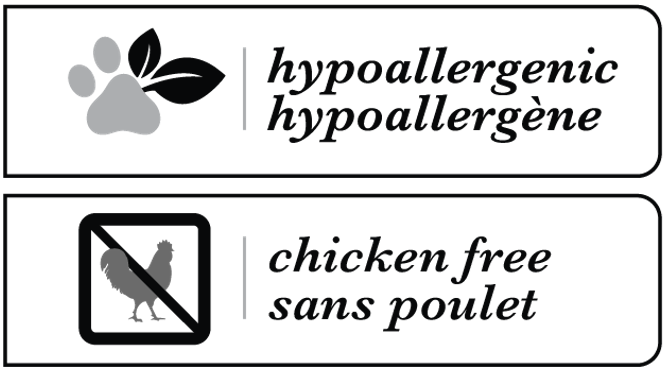
To make recognition easier, Oven-Baked Tradition has added distinctive logos on the front of food bags to quickly identify hypoallergenic and chicken-free products. Watch for these logos on packaging to easily choose the recipe that’s right for your dog or cat.
Oven-Baked Tradition hypoallergenic products are available in over 2,000 retail locations across Canada. Whether you’re looking for complete food or treats for your dog or cat, you can easily find Oven-Baked Tradition quality at your local specialty pet store.
Locate the nearest retailer today and offer your companion safe, nutritious products tailored to their dietary needs.
Yes. Some grains, such as wheat, corn, or soy, can cause allergic reactions or intolerances in certain dogs and cats. Oven-Baked Tradition recipes contain no wheat, corn, or soy to help reduce the risk of allergies and provide more digestible, safer food options for your pet.