When we think about our dogs’ and cats’ health, we often focus on their food, energy levels, or coat quality but far less on their teeth. Yet oral health plays a key role in their overall well-being, from digestion to daily comfort and quality of life. Between conflicting advice, common misconceptions, and so-called miracle solutions, it’s easy to feel overwhelmed.
In honor of Pet Dental Health Month, we wanted to set the record straight. No judgment, no guilt, just clear, simple facts. In this article, we break down the most common myths surrounding dental health in dogs and cats, highlighting the realities and offering practical, real-life solutions for today’s pet parents. Because taking care of their smile is also a way of showing them how much we love them.

Myth: The cooking method has no impact on dental health.
False
The way kibble is cooked directly affects its density, texture, and how it interacts with teeth. Extruded kibbles contain more air, making them lighter and more likely to break apart quickly upon contact with the tooth. Oven-baked kibbles, on the other hand, are denser and crumble gradually much like a biscuit when chewed. This texture encourages stronger mechanical action on the tooth surface, helping limit plaque buildup. Of course, no kibble can replace brushing, but an appropriate texture offered daily can support oral health. Oven baking also helps preserve ingredient quality, making it part of a simple, natural, and holistic approach to prevention.
At Oven-Baked Tradition, our recipes are slowly oven-baked, naturally promoting dental health. Learn more about our baking method and its benefits for your pet’s dental health.
Myth: If your pet doesn’t chew dental kibble, it’s useless.
False
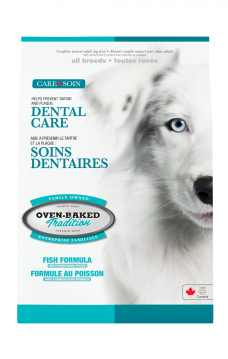
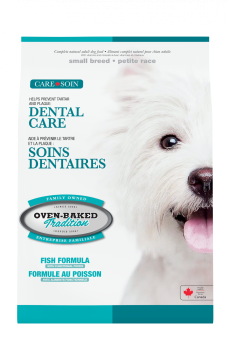
Dental health isn’t only about chewing. Our Dental Care kibbles are coated with sodium hexametaphosphate, an ingredient known to work in contact with saliva to help neutralize oral acids. This coating binds the minerals responsible for plaque and tartar formation even if the kibble is swallowed quickly. In other words, the dental benefit doesn’t stop at chewing, it continues in the mouth. While chewing is certainly beneficial, a well-formulated dental diet can provide daily support, even for pets who eat quickly. Consistency remains the key to prevention.
Myth: Kibble size doesn’t matter.
False
Kibble size directly influences how an animal eats and in turn, its impact on dental health. Larger kibbles encourage longer chewing which improves mechanical cleaning of the teeth. Kibbles that are too small may be swallowed whole, reducing their preventive effect. Choosing a kibble size adapted to your pet’s morphology, breed, and age is a simple yet effective strategy to support daily oral health especially when integrated into a complete and well-balanced diet.
Myth: Bones are the best way to keep your dog’s teeth clean.
False
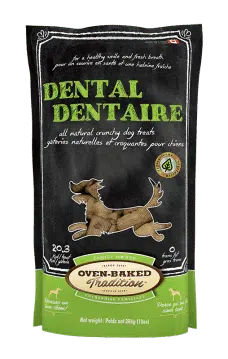
While bones are often perceived as a natural solution, they can pose real risks: tooth fractures, choking hazards, and internal injuries. Their dental effectiveness is also inconsistent and difficult to control. Dental sticks and treats specifically designed for oral care are a much safer alternative. They are formulated to support chewing while respecting your pet’s overall health. When it comes to dental care, prevention should never come at the cost of safety.
Looking for alternatives or tips for brushing your dog’s teeth? Check out our article: Does Your Pet Need Motivation to Clean His Teeth?

Myth: Cats don’t need dental care like dogs do.
False
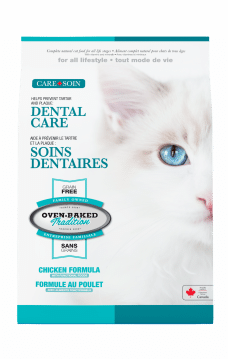
Dental issues in cats are often more subtle but just as common. Cats are particularly prone to gingivitis and periodontal disease, often without obvious signs. Because they tend to hide pain, problems may go unnoticed until they are quite advanced. That’s why a daily diet that supports dental health is essential to help limit plaque buildup and maintain healthy gums. For cats, prevention is especially important and it starts with simple habits built into their routine. Oven-Baked Tradition offers a preventive recipe specially designed to support cats’ dental health, as part of a daily care routine.
Myth: Small dogs have fewer dental problems than large dogs.
False
Small dogs have the same number of teeth as large dogs just in a much smaller mouth. This lack of space between teeth encourages plaque and tartar buildup and often leads to bad breath. As a result, small breeds are frequently more at risk for dental issues. A diet tailored to their morphology, combined with preventive dental solutions, can go a long way in reducing these challenges. Once again, daily prevention is the best ally.
Myth: Bad breath is normal in pets.
False
Persistent bad breath is often a sign of bacterial overgrowth in the mouth. It can indicate plaque, tartar, or gum inflammation. If the issue persists despite brushing and preventive dental products, a veterinary consultation is strongly recommended. Fresh breath isn’t a luxury it’s an important indicator of both oral and overall health.
Worried about your dog’s teeth? Check out our article: Dental Disorders of Dogs: A Guide to Dog Dental Health

Myth: All dental products are the same.
False
Not all dental products are created equally. Their effectiveness depends on several factors, including the presence of functional ingredients like sodium hexametaphosphate, kibble size and texture, cooking method, and ingredient quality. Reading labels and understanding what you’re feeding your pet helps you make informed choices without compromising digestion or overall health. Dental prevention should always be part of a balanced nutritional approach.
Myth: Pets don’t feel dental pain like humans do.
False
Pets do feel pain, they just can’t tell us. Dental issues can be so painful that they lead to reduced appetite or behavioral changes. Preventing these problems is essential to avoid unnecessary suffering. For pets with chronic or severe oral health issues, dietary adaptation is crucial. A semi-moist, oven-baked food can be an ideal solution to support food intake while respecting their comfort.
These semi-moist recipes are available for both dogs and cats, with tailored flavors: chicken and fish for dogs, and fish or turkey for cats.

Myth: White teeth mean good dental health.
False
White teeth don’t guarantee the absence of plaque, tartar, or periodontal disease. Some whitening products can even damage enamel. True oral health is assessed by gum condition, the absence of inflammation, pain, and bad breath. Looking at the mouth as a whole is far more telling than tooth color alone.

Taking care of your dog’s or cat’s dental health also means protecting those little moments of closeness that matter so much. Cuddles, stolen kisses, and noses pressed close. It’s not about perfection, but about making good choices, one day at a time. A well-adapted diet thoughtfully designed dental products, and a bit of prevention can truly change your pet’s daily comfort. And let’s not forget the essentials, the toothbrush remains the number one ally. After all, we wouldn’t skip brushing our own teeth so why should our pets? By combining brushing, proper nutrition, and preventive solutions, we help our fur babies eat comfortably and enjoy life to the fullest. And a pet who feels good on the inside shows it in every wag, purr and joyful moment.
Try our dental products and give your pet the best smile.
Find a retailer near you.