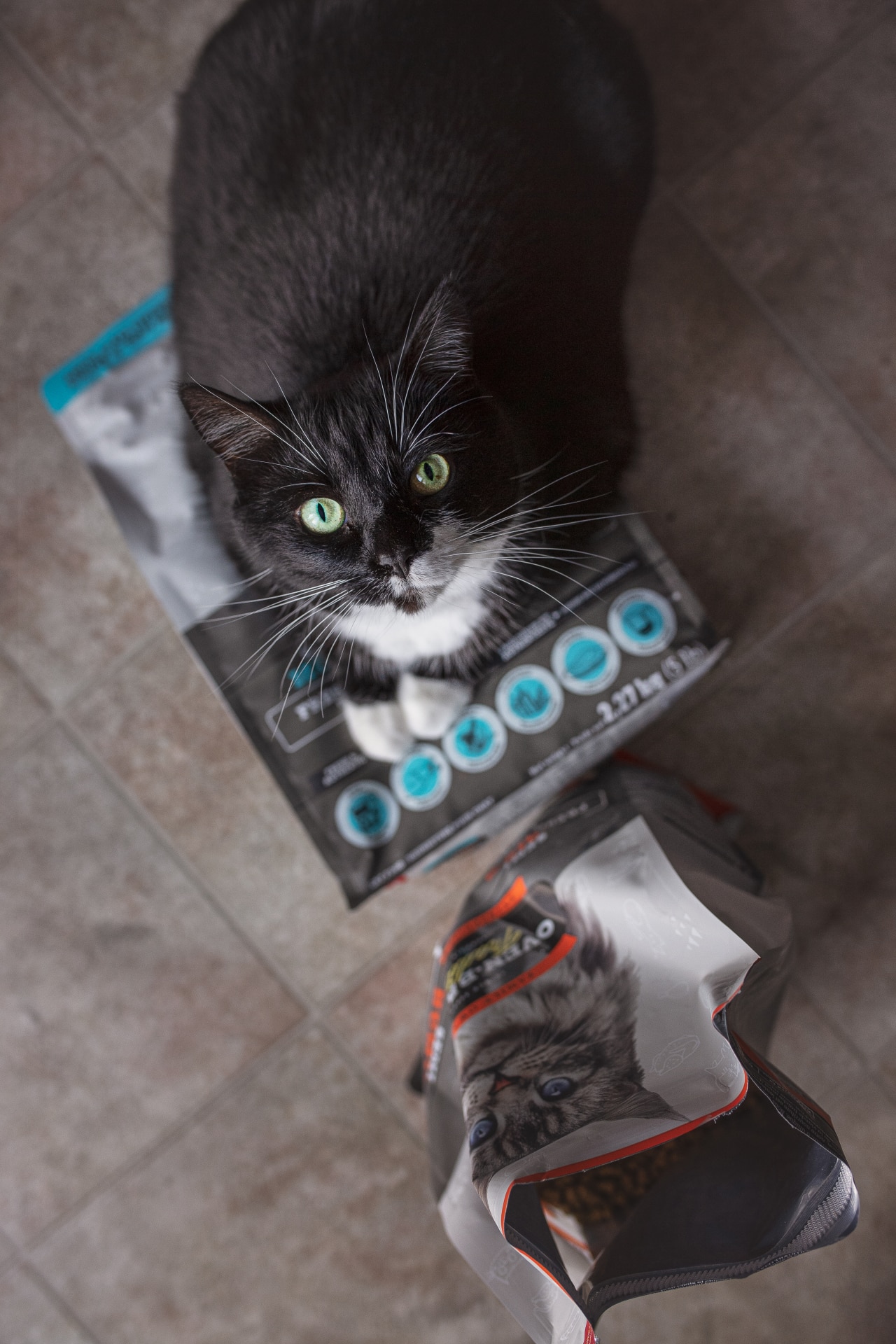
Since we are concerned with improving the quality of life of our cats, issues such as stress, fear and anxiety can cause some behavioural problems that can affect us and our feline friends.
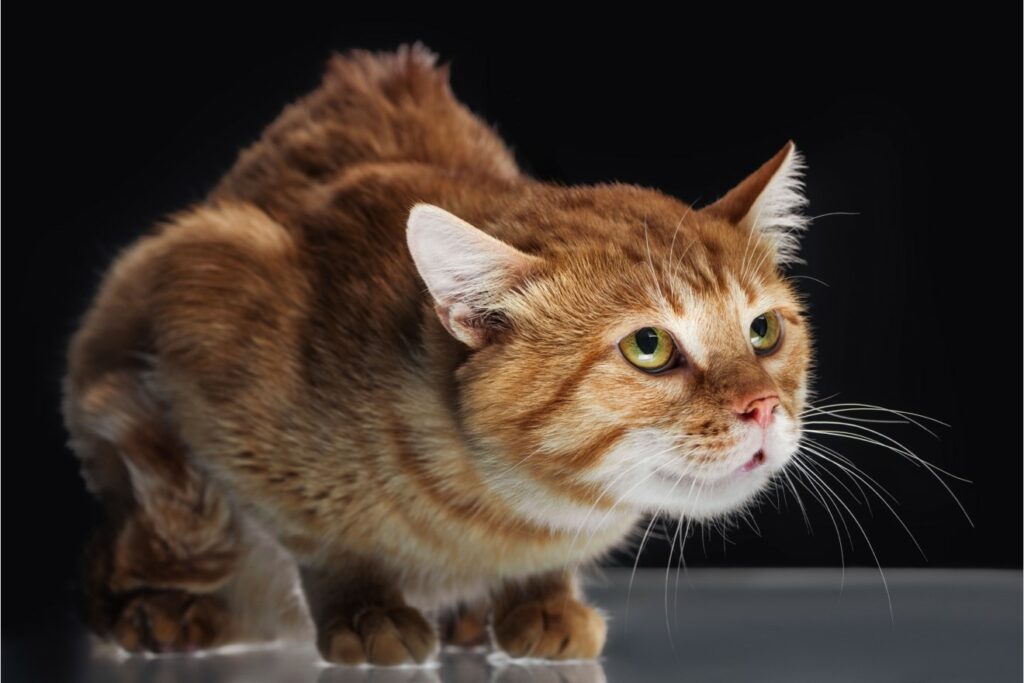
First of all, stress is a normal cause and effect response of everyday life. Something happens in the environment and it generates good or bad stress. Fear is an emotion that accompanies the awareness of a “real” danger in the eyes of the cat. Even if, for us, it may seem trivial, the cat sees a concrete risk of dying. Anxiety, on the other hand, is an unpleasant psychophysiological state that manifests itself as a fear to an absent danger. This will manifest itself as physical symptoms such as difficulty breathing, palpitations, as well as psychological disorders such as permanent hypervigilance, obsessive behaviours, etc.
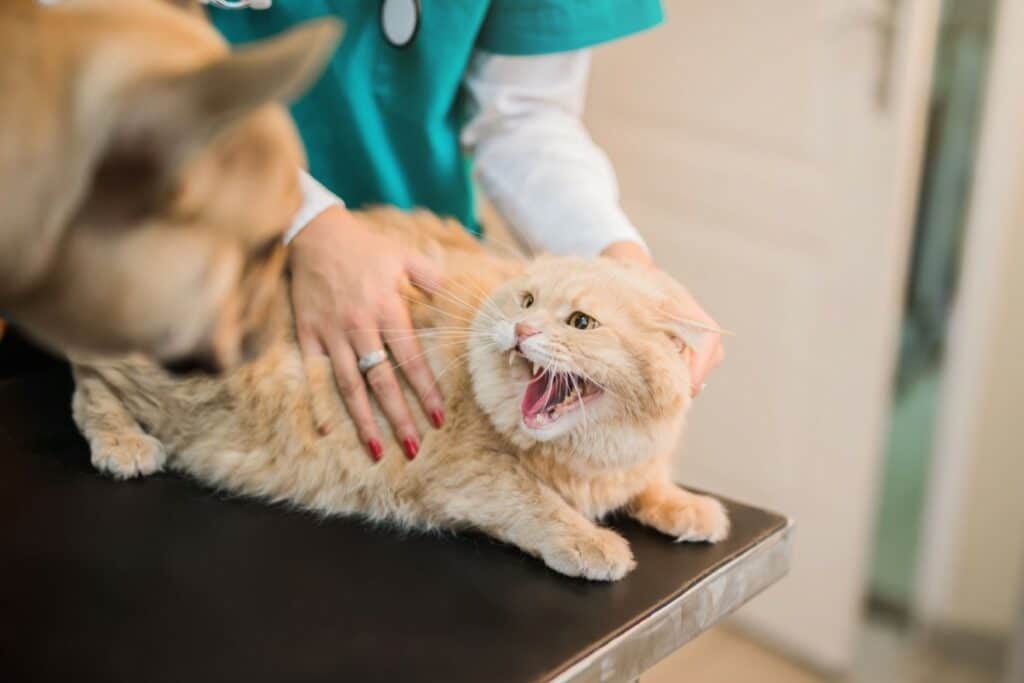
Here are some ways to recognize the signals your feline friend is sending you. This list is not exhaustive, since each cat will develop different mechanisms when facing unpleasant situations. Moreover, it will not necessarily show all the signs at the same time, or sometimes successively. Some cats are more fearful than others and will respond differently before having an unexpected reaction.
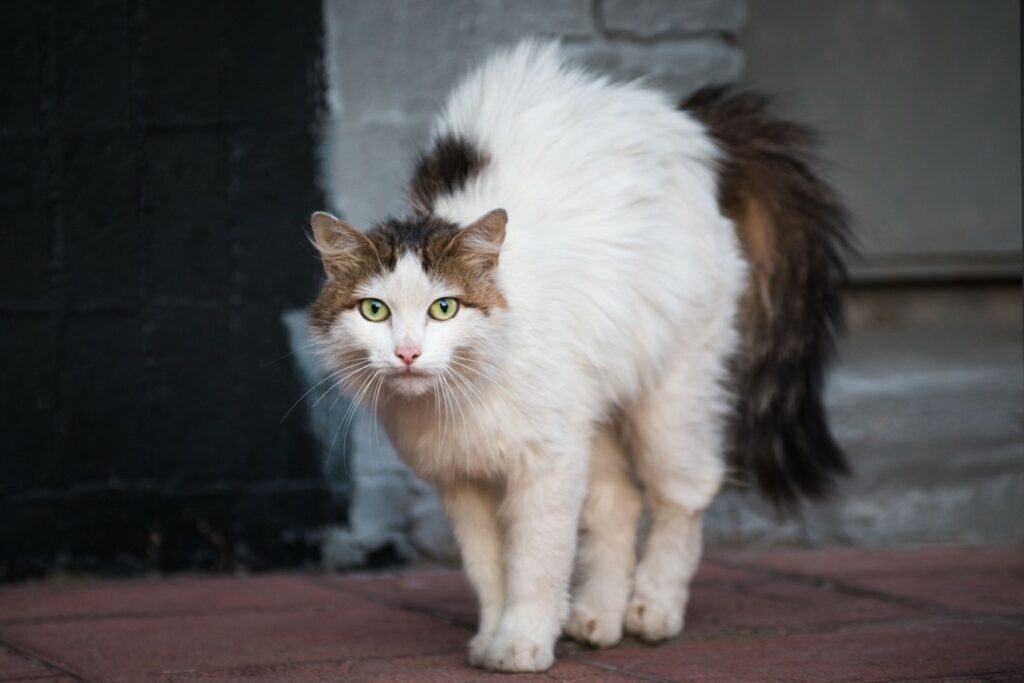
For cats, the most common signals of fear can be demonstrated by piloerection, ears flattened back, a low tail tucked under the body, a hunched position, dilated pupils, vocalizations, growls, spitting, wheezing, tremors, releasing urine and/or stools and emptying the anal glands. If the cat feels cornered it might probably result in flight behaviour, which could lead to an attack.
To help your cat return to calmness, arrange several places for it to hide. Another way of managing its environment is to minimize exposure to the trigger. You can also use synthetic hormones in a spray or diffuser, provide it with water as well as a good treat that it adores, such as our Oven-Baked Tradition fish fillets or our canned pâté. The worst you can do is to punish it, force it or put it back in the stressful situation. Arm yourself with patience: it will be grateful and will return its affection a hundredfold.
If your cat’s condition persists and it affects its quality of life, contact your veterinarian or a qualified cat trainer in your area as soon as possible.