He hears the word “walk” and suddenly, he’s ready before you are. Leash? Found it. Door? Already watching it. Your second shoe? A detail that is clearly none of his concern. For some dogs, staying active is practically a full-time job. Hiking, running, swimming, playing at the park, agility training, long walks, or a quick game of fetch that was supposed to last five minutes and somehow turns into forty. They’re always ready for more. We love seeing them that way.
Behind all that enthusiasm are hardworking joints that deserve some attention too. Every sprint, turn, jump and landing puts your dog’s hips, knees, shoulders and other joints to work. And unlike us, your dog probably isn’t going to wake up on a Tuesday morning and announce, “I think I should take it easy today.”
Some dogs will happily keep going even when they’re starting to feel uncomfortable. That’s why caring for an active dog’s joints shouldn’t begin only when they start slowing down. Maintaining a healthy body condition, choosing appropriate activities, allowing time for rest and recovery and providing thoughtful nutrition can all be part of a well-rounded approach to supporting mobility throughout their life.
Because ultimately, the goal isn’t to turn your outdoor enthusiast into a couch potato. It’s to help them keep doing what they love, as comfortably as possible.
Why are active dogs more at risk for joint problems?
Staying active is great for dogs. Regular physical activity helps maintain muscle mass, a healthy weight and overall fitness. Activity itself isn’t the problem. Just like with human athletes, it’s the combination of intensity, frequency, repeated impact and sometimes not enough recovery time that can place greater stress on the musculoskeletal system.
Repeated impact and its effect on joints
Think about a simple game of fetch. Your dog takes off. Stops suddenly. Turns. Takes off again. Jumps. Lands. Then, does it all over again. Again and again. Because apparently, you still haven’t understood that the game is not over. All those movements repeatedly put your dog’s joints to work. Dogs that regularly run, hike, compete in agility, do canicross or take part in other high-intensity activities may, therefore, experience repeated stress on their joints.
Of course, that doesn’t mean it’s time to hide the ball at the back of the closet. Appropriate physical activity remains an essential part of a dog’s well-being. The idea is simply that the more active a dog is, the more important proper preparation and recovery become.
A gradual warm-up before intense activity, a progressive increase in effort and adequate recovery time can all help avoid asking the body to go from zero to one hundred in a matter of seconds. Although, let’s be honest, your dog would probably choose zero to one hundred every time.
Activity intensity and insufficient recovery
Enthusiastic dogs have one small flaw: they’re not always the best judges of their own limits. A dog may happily keep hiking, chasing a ball or playing with a friend long after a break would have been a good idea.
That’s where we come in. After sustaining physical activity, the body needs time to recover. Muscles and joints have been hard at work, energy stores need to be replenished and the body needs time to regain its balance. Sleep and rest periods are therefore an important part of an active dog’s routine. In other words, recovery isn’t laziness. It’s training just lying down.
Risk factors that shouldn’t be overlooked
Any dog can develop joint problems, but certain factors can increase the risk. Genetics and body structure, for example, can play an important role. Some large and giant breeds are more predisposed to certain orthopedic conditions, including hip dysplasia.
Weight is another major factor. A few extra pounds may not seem like much, especially hidden under a gorgeous coat, but they add extra load that the joints have to carry with every step. Maintaining a healthy weight is, therefore, one of the most important ways to help support long-term mobility.
Age also matters. As dogs get older, they may become stiffer and develop joint changes associated with conditions such as osteoarthritis. The type and frequency of activity, the surfaces a dog exercises on and their overall physical condition should also be taken into account. A large dog who loves to jump, a canine athlete who trains several times a week and a companion who enjoys the occasional hike don’t have exactly the same needs.
Signs your dog’s joints may be feeling the strain
The challenge with our dogs? They’re not always very good at telling us when something is bothering them. Some will keep chasing their ball with the same enthusiasm, only to let us know a little later that maybe they overdid it. Your dog may also:
- Seem stiffer after a period of rest
- Take longer to get up
- Have difficulty going up or down stairs
- Hesitate before jumping into the car or onto a surface they used to reach easily
- Slow down during walks
- Change the way they run or move
- Be less eager to keep an activity going
What matters most is noticing changes from their usual behavior. Did your dog always jump straight into the car but now pause at the door? Did they used to fly up the stairs without a second thought but suddenly seem to size up every step as though they’re tackling Everest? That’s worth paying attention to.
When your dog’s behavior does the talking
Discomfort doesn’t always show up in the way a dog walks. A dog may seem less excited about playing, change positions frequently when lying down, or hesitate before an activity they used to love. Some dogs may also become more irritable when touched in certain areas. That’s when knowing your dog well can make all the difference.
If your companion, who was always the first one waiting at the door, suddenly watches you put on your shoes with the enthusiasm of a teenager who’s just been asked to empty the dishwasher, something may have changed. Persistent limping, obvious signs of pain or a noticeable change in mobility should always be evaluated by a veterinarian.
Nutrition: An essential part of supporting joint health
When we think about an active dog, exercise naturally comes to mind. But we should also think about what’s in their bowl. An active body needs the right nutrients every day to support muscles, tissues and overall physical condition. That’s where nutrition can become a valuable part of a well-rounded approach to joint health.
The role of key nutrients
Protein
High-quality protein provides the amino acids needed to help maintain muscle mass. Why talk about muscles in an article about joints? Because strong muscles help support the body and its movements. For active dogs, maintaining adequate muscle mass is an important part of the equation.
Omega-3 fatty acids
Certain omega-3 fatty acids, particularly EPA and DHA from marine sources, have been studied for their role in supporting the body’s normal inflammatory response and may help support joint health.
Glucosamine and chondroitin
These are two names many owners of active dogs are already familiar with. Glucosamine and chondroitin are commonly used in products designed to support joint health. They are associated with components of cartilage and are included in some nutritional formulas developed to help support mobility.
Functional ingredients
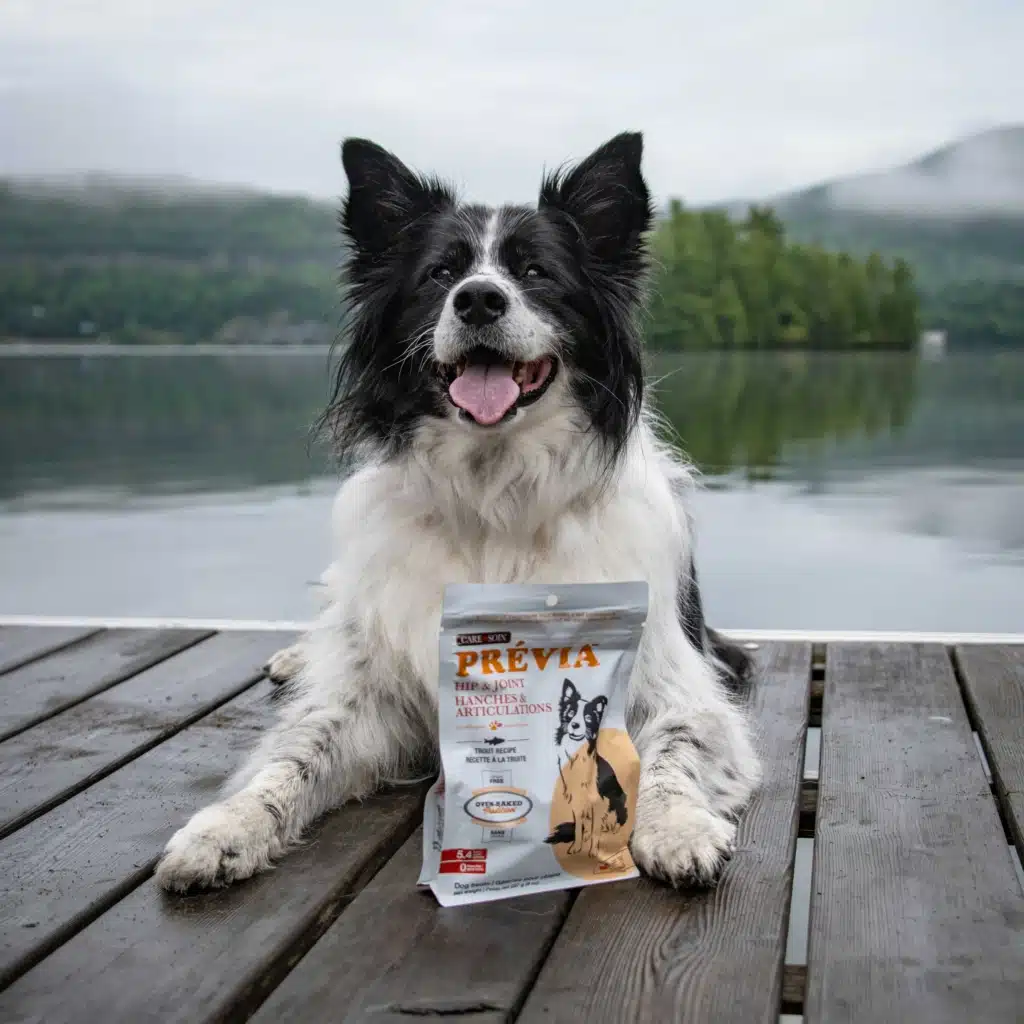
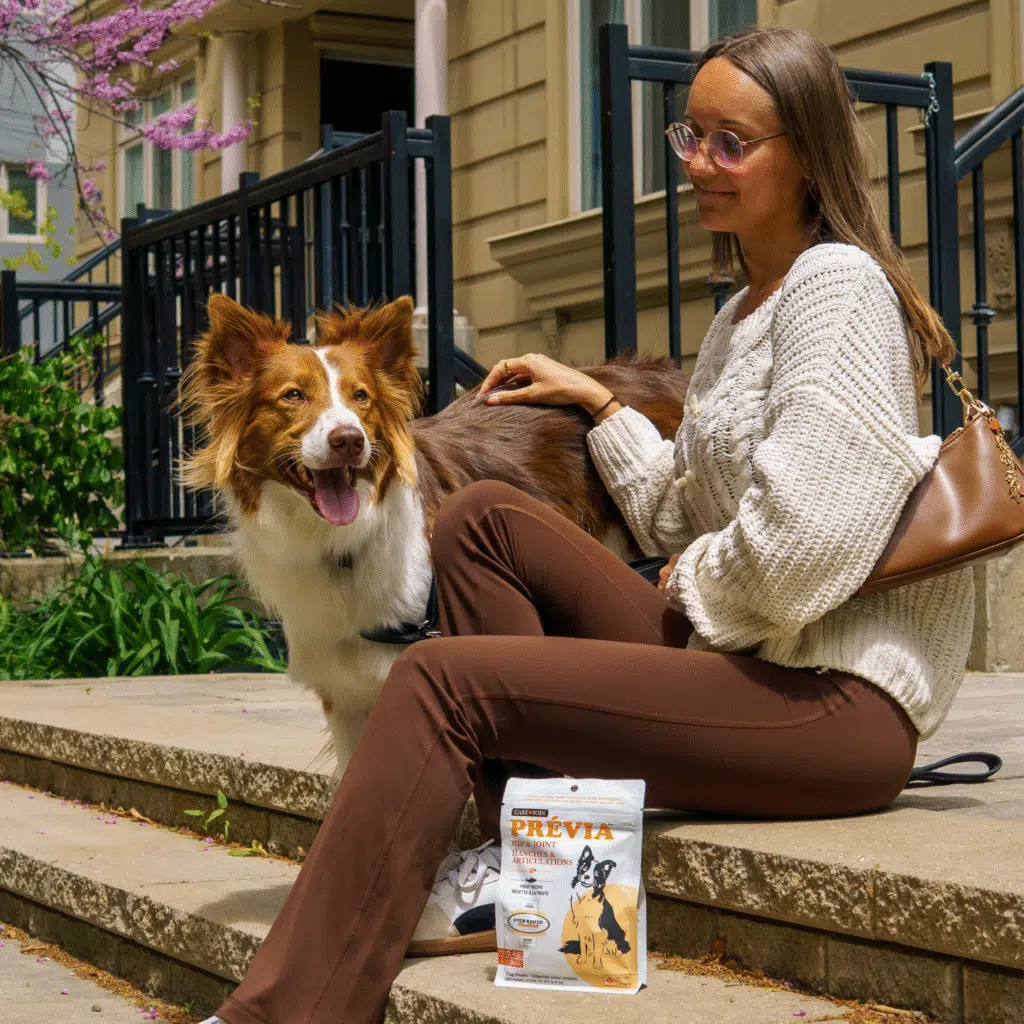
Some formulas take things a step further by combining several targeted ingredients. That’s the approach behind our “PRÉVIA Hip & Joint” functional treats, made with trout and formulated with glucosamine, chondroitin, turmeric, and a blend of tributyrin and tannic acid. Functional treats combine something dogs already love, a reward with ingredients selected for a specific nutritional purpose. That’s the thinking behind “PRÉVIA Hip & Joint”. Instead of necessarily adding another step to your dog’s routine, you’re simply making an existing one work a little harder.
For pet parents looking into joint supplements for dogs, glucosamine or other ways to support their dog’s joints, this type of approach may be particularly appealing. Of course, a functional treat isn’t intended to replace veterinary treatment when a dog has a medical condition. Rather, it offers a simple way to incorporate selected functional ingredients into a daily routine focused on mobility. Because if your dog is getting a treat anyway and something tells us they won’t object so why not choose one designed with their needs in mind?
Why daily nutrition makes all the difference
Joint health doesn’t come down to one miracle ingredient. It’s built through the everyday habits that work together. A complete and balanced diet, a healthy weight, appropriate physical activity, adequate recovery and targeted nutrients when needed.
That’s why it can be helpful to look at your dog’s overall nutritional routine rather than automatically reaching for another supplement to add on top of it. The right food can provide the foundation. A functional wet food can complement it. A targeted treat can easily become part of their daily rewards.
In other words, instead of building a collection of little bottles and containers that makes your kitchen counter look like a canine pharmacy, certain nutrients can be incorporated directly into foods your dog is already eating.
Wet food: An often-overlooked ally
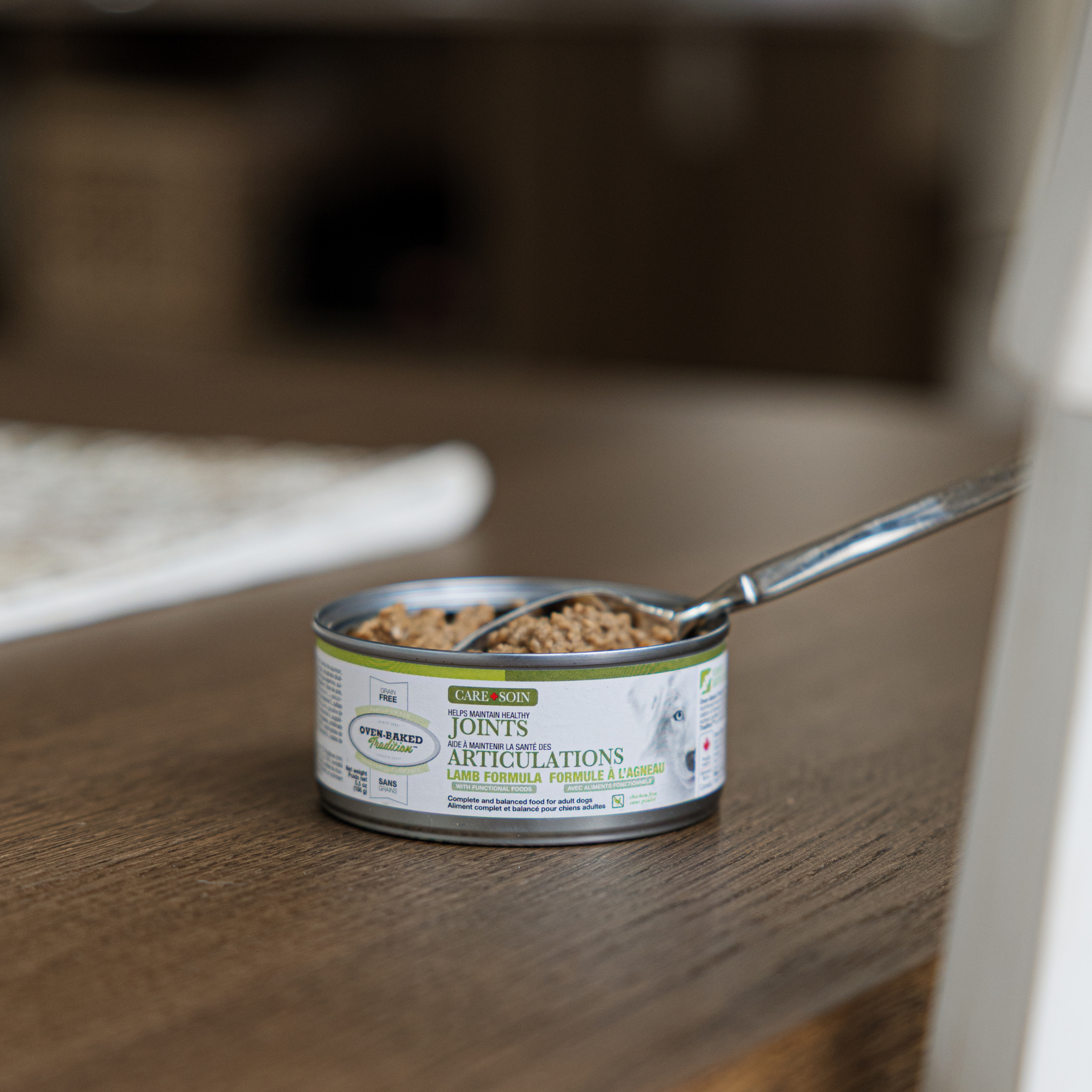
When we think about joint health, a can of food probably isn’t the first thing that comes to mind. Yet, wet food can play an interesting role in the routine of an active dog. Water is essential for the body to function properly, including its muscles and tissues.
Active dogs lose water through breathing and panting, so it’s important that they always have access to fresh water, especially before and after physical activity. Wet food naturally contains much more water than dry food and can therefore contribute to daily hydration. Of course, it should never replace the water bowl. Think of it as simply lending a helping paw. After sustained activity, some dogs may enjoy a wet meal or a portion mixed with their regular food. Its soft texture and palatability also make it an easy way to add a little variety to mealtime.
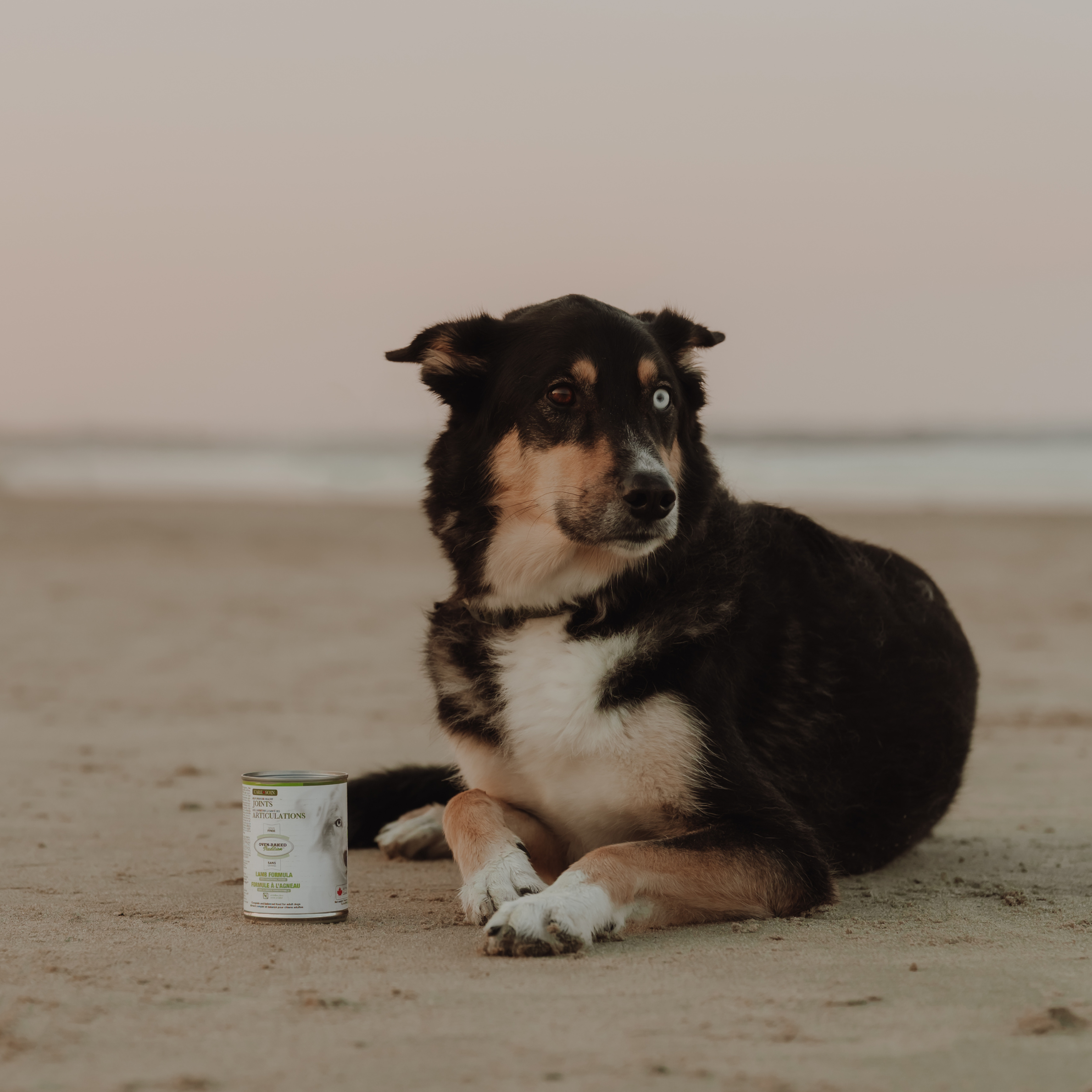
“Oven-Baked Tradition Joint Care” wet food was developed with this same functional nutrition approach in mind. Its lamb recipe contains glucosamine, chondroitin, green-lipped mussel, salmon oil and butyric acid. It brings nutrition, hydration and targeted ingredients together in the same bowl.
How to incorporate wet food into your dog’s routine
Wet food can be served as a meal, following the product’s feeding guidelines, or incorporated into your dog’s regular feeding routine based on their individual needs. If you’re combining different foods or regularly offering treats, however, it’s important to keep your dog’s total daily calorie intake in mind.
That’s especially important when it comes to joint health, since maintaining a healthy weight helps reduce the load placed on the joints. In other words, adding functional foods, yes absolutely. Adding extra calories without counting them is not quite as helpful.
When is the best time to give a joint Care treat?
Good news, your dog would probably vote for “right now.” In practice, consistency is generally more important than finding the perfect time of day. A joint support treat can easily become part of your dog’s routine:
- After a walk
- During training
- After physical activity
- Or simply as part of their daily routine
For active dogs, it can even become a little post-activity ritual. You put away the leash. They get their treat. Everyone’s happy.
Supporting Your Dog’s Active Lifestyle, Today and Tomorrow
When your dog runs ahead of you, jumps into the car without hesitation or brings you their leash with their usual enthusiasm, you probably aren’t thinking about their joints. That’s a good thing. Ideally, joint care begins while they still want to be everywhere at once, not only when climbing three steps suddenly becomes something they have to think twice about.
Supporting your dog’s mobility means investing in all those little moments we sometimes take for granted: the walk that gets a little longer because they want to go “just a bit farther,” the dash to the door when someone rings the bell, or the enthusiastic leap into the car because they know an adventure is about to begin. Because ultimately, joint health isn’t just about hips, knees or cartilage. It’s about freedom of movement and quality of life.
So, let’s keep letting them run, explore, play and convince us that a 45-minute walk was clearly nowhere near enough. Our job is simply to think today about what can help them keep doing it tomorrow. And if, after all that, your dog brings you the leash again? Well… for the sake of your health too, we’ll give you permission to pretend you didn’t see it.
Support your dog’s joints every day.
Find a retailer near you.
FAQ – Dog Joint Health
Supporting your dog’s joints starts with a well-rounded approach: maintaining a healthy weight, providing regular physical activity suited to their fitness level, allowing adequate recovery time, and feeding a complete and balanced diet. Certain nutrients, including high-quality protein and omega-3 fatty acids, can also help support overall physical condition and joint health. Functional foods or treats formulated with targeted ingredients can also be incorporated into their daily routine.
Don’t forget about rest! Even if your dog is convinced that a fourth game of fetch is absolutely essential to their happiness, recovery is part of an active lifestyle too.
Limping isn’t the only sign to watch for. A dog may seem stiffer after resting, have difficulty getting up, hesitate before taking the stairs or jumping into the car, slow down during walks, or simply show less enthusiasm for certain activities. Often, it’s a change in your dog’s usual habits that provides the first clue. If you notice signs of pain, persistent limping or a change in the way your dog moves, consult your veterinarian to determine the cause.
Hip dysplasia is a complex condition in which genetics play an important role. This means there’s no guarantee that diet or lifestyle alone can prevent a dog from developing it. However, certain factors can be better managed, particularly in large-breed dogs that are predisposed to the condition. Proper nutrition, maintaining a healthy weight and suitable physical activity are especially important during a dog’s growth and development. If your puppy belongs to a breed at greater risk, your veterinarian can also advise you on nutrition, healthy growth and appropriate screening.
Not necessarily. Before automatically adding a supplement, take a look at what your dog is already getting through their diet. Some functional foods and treats already contain nutrients and targeted ingredients designed to support joint health.
An approach that combines complete and balanced nutrition with functional wet food and targeted treats can help incorporate these ingredients directly into your dog’s existing routine. The goal isn’t necessarily to build a collection of supplements but rather to choose a consistent approach that suits your dog’s individual needs. If your dog has already been diagnosed with a joint condition or is receiving treatment, talk to your veterinarian before adding a supplement.
Oven-Baked Tradition offers different options that can easily fit into a routine focused on mobility. Our “Joint Care” wet food for dogs, made with lamb, contains glucosamine, chondroitin, green-lipped mussel and salmon oil. Our “PRÉVIA Hip & Joint” functional treats, made with trout, contain glucosamine, chondroitin, turmeric, as well as a blend of tributyrin and tannic acid.
The advantage? You can incorporate functional ingredients into moments that are already part of your dog’s day, meaning mealtime and treat time.
Yes. Both products can be incorporated into the same feeding routine because they offer complementary benefits. “Joint Care” wet food adds moisture to your dog’s meal while providing targeted ingredients, while “PRÉVIA Hip & Joint” functional treats offer another way to incorporate functional ingredients at treat time. Just remember to consider your dog’s overall diet and total daily calorie intake to help maintain a healthy weight, especially important factor for joint health. Because when it comes to mobility, every little choice matters. Even the ones that start in the bowl.