Your dog has probably enjoyed having you around more this summer. Longer walks, more time together, and kids spending extra time at home have all become part of their daily routine.
Then back-to-school season arrives. The alarm clock goes off earlier, kids head back to school, parents return to work, and suddenly the house becomes much quieter. While these changes are a normal part of family life, your pet may not immediately understand why their routine has changed.
Some dogs adjust quickly, while others may need more time. A change in routine can sometimes lead to stress, restlessness, or new behaviors. A dog that barks more when left alone, seems more anxious, or has trouble relaxing may simply need extra support during this transition.
Cats can also be affected by these changes. Although they are often considered more independent, cats are strongly connected to their environment and daily habits. Changes in their routine can sometimes show up through more subtle signs of stress.
Back-to-school season is the perfect time to take a closer look at your pet’s routine and introduce small changes that can help them feel more comfortable. In this article, discover how to recognize signs of stress in dogs and cats, help your pet adjust to a new routine, and create habits that support their overall well-being.
Why back-to-school season can be stressful for dogs and cats
Back-to-school season often brings a major change to the household. After spending more time with their family during the summer, some dogs suddenly return to a different daily rhythm: kids leave for school, parents go back to work, and the home becomes much quieter.
For us, these changes are simply part of the yearly routine. For your pet, however, they can require an adjustment period. Your dog may not understand why the home that was once filled with activity is suddenly calm for several hours each day. They notice changes in schedules, morning departures, and the familiar patterns of their family.
Cats can also be sensitive to these changes. While they may show their attachment differently than dogs, they still rely on consistency and familiarity in their environment.
The good news? With a few simple adjustments, you can help your companion feel more secure and make the transition back to a new routine easier.
A sudden change in routine can affect your pet
Pets are excellent observers of everyday life. They recognize the small rituals that shape their world: mealtimes, walks, play sessions, and the moment their family comes home.
When these familiar patterns change quickly, some dogs may show signs of stress or have more difficulty being alone. This is not necessarily a training issue. It may simply be a reaction to a new situation they are learning to manage.
Just like us, dogs can experience stress when their environment changes. Back-to-school season is a great opportunity to pay closer attention to your pet’s behavior and provide the support they need during this transition.
Separation anxiety in dogs: Signs to watch for
Not all dogs respond to periods of separation in the same way. Some adjust quickly when their routine changes, while others may need more time to feel comfortable when spending more time alone.
Separation anxiety in dogs occurs when a dog experiences significant stress or distress when separated from their trusted people. It can sometimes appear during a major change in routine, such as the return to school or work after a period of increased family time.
Understanding the signs can help you support your dog early and make the transition easier.
How to recognize a stressed or anxious dog?
Signs of stress in dogs can take many different forms. Some behaviors to watch for include:
- More frequent barking or whining when left alone;
- Restlessness or difficulty settling down;
- Destructive behaviors;
- Changes in appetite or digestion;
- Noticeable changes in energy levels.
It is important to remember that changes in behavior can have many different causes. If signs persist or become more severe, speaking with an animal health professional can help you better understand your companion’s needs.
Can cats experience separation anxiety too?
Although cats are often seen as more independent, they can also be affected by changes in their environment and daily routine.
A stressed cat may show changes in behavior, such as hiding more often, becoming more vocal, losing interest in certain activities, or changing their eating, litter box, or grooming habits.
The key is to know what is normal for your cat. A sudden change in behavior is often the first sign that your companion may need a little extra attention, consistency, and support during a period of transition.
How to help your pet adjust to a new routine
After a summer with more flexible schedules, it can be helpful to gradually reintroduce the habits that will be part of your back-to-school routine.
Small adjustments can make a big difference. By helping your pet transition step by step, you give them time to understand their new schedule and feel more confident in their environment.
Gradually return to a daily routine
Start by slowly adjusting key parts of your pet’s day, such as wake-up times, meals, walks, and rest periods. These familiar patterns help your dog anticipate what comes next and create a greater sense of security.
Dogs are especially attentive to their family’s habits. They quickly learn everyday cues, like when children leave in the morning or when their family usually returns home at the end of the day.
A predictable routine does not mean every day needs to be exactly the same. Life with a family naturally comes with unexpected moments. The goal is simply to provide enough consistency for your pet to have reliable points of reference and feel more comfortable with change.
Help your dog get used to being alone
For many dogs, the biggest challenge of back-to-school season is returning to longer periods alone at home.
If your dog spends a lot of time with you during the summer, it can be helpful to gradually rebuild their comfort with being alone. Start with shorter absences and slowly increase the amount of time you are away.
The way you leave and return home can also make a difference. Keeping these moments calm and natural helps your dog understand that being alone is simply part of the routine and that you will always come back.
Activities that keep their mind engaged can also help. Interactive toys, scent games, or appropriate chew activities can turn alone time into a more positive experience.
Create a reassuring environment at home
Your pet’s environment plays an important role in helping them feel safe and comfortable.
A cozy space with familiar items, a quiet place to rest, and activities suited to their energy level can make a difference during the hours when the home is quieter.
For dogs that are more active or sensitive to change, the goal is to create positive associations with alone time. A quiet home does not have to mean boredom or stress.
Every pet adapts at their own pace. By combining consistency, patience, and a positive approach, you give your companion the best chance to regain their balance during this new chapter of the year.
Complementary solutions to help calm your dog or cat
When pets experience a period of change, several factors can help create a more reassuring environment. A stable routine, positive habits, and activities adapted to their needs are often the first steps in helping your companion better manage transitions.
Additional solutions can also support your pet’s overall well-being. These approaches are not meant to replace a complete wellness routine, but they can become part of your daily habits to help your dog or cat feel more comfortable and secure.
Calming pheromones
Pheromones are chemical signals naturally produced by animals. Some solutions available on the market mimic these signals to create a sense of familiarity and security in the environment.
They can be particularly helpful during periods of change, such as moving to a new home, welcoming a new pet, or returning to a busier routine. They can also be part of a broader approach to supporting your pet’s well-being, alongside other solutions such as calming treats, a reassuring routine, or regular opportunities for play and relaxation.
Since every animal responds differently, it’s important to observe their behavior and choose the approaches that best meet their individual needs.
Enrichment and mental stimulation
A dog that lacks mental stimulation may sometimes have more difficulty managing periods of separation. Activities that encourage natural behaviors, such as searching, problem-solving, and exploring, can support their overall balance.
Interactive toys, treat-dispensing toys, and scent-based games are great ways to keep your dog’s mind engaged, even for a few minutes each day.
For cats, enrichment often starts with their environment. Spaces where they can climb, observe, explore, or hide allow them to express natural behaviors and feel more comfortable in their surroundings.
The importance of a consistent feeding routine
Nutrition is also an important part of your pet’s daily routine. Consistent feeding times help create predictable moments that can make your dog or cat feel more secure.
Beyond regularity, choosing a diet that meets your pet’s nutritional needs plays an important role in their overall well-being. Proper digestion, balanced nutrition, and quality ingredients all contribute to supporting their health every day.
Calming functional treats to support emotional well-being
Treats are often part of the special moments shared between pets and their families. Whether after a walk, during training, or simply as a moment of connection, they can also become a way to support your dog’s overall well-being.
This approach is what inspired Oven-Baked Tradition to develop Prévia Calming Treats, a grain-free dog treat from the Care line, designed to support dogs during times of increased stress, such as changes in routine, travel, or separation.
Behind every Prévia recipe is a Canadian expertise and a commitment to better meet the needs of pets. Developed by the Oven-Baked Tradition expert team in collaboration with the support of veterinarians, Prévia Calming Treats are slowly oven-baked and made in Canada.
“When developing a recipe, we don’t only think about the ingredients. We also think about the moment’s pets and their families experience. With Prévia Calming Treats, our goal was to create a treat that could easily fit into everyday life and support dogs during times when they need a little extra support.”
Marc-Antoine St-Onge
Director of Research and Development
Oven-Baked Tradition
Its formula combines functional ingredients selected for their complementary properties, including a specific blend of sweet orange extract and yeast culture, L-tryptophan, chamomile, and ginger.
The recipe also contains fresh salmon as the first ingredient. This high-quality protein source is highly digestible and often appreciated by dogs with food sensitivities. Supporting healthy digestion can also contribute to overall well-being, as digestive discomfort may affect a dog’s behavior.
It is important to remember that there is no single solution that works for every pet. In many situations, a combination of approaches can make the biggest difference: a stable routine, a reassuring environment, mental stimulation, proper nutrition, and complementary solutions such as functional treats.
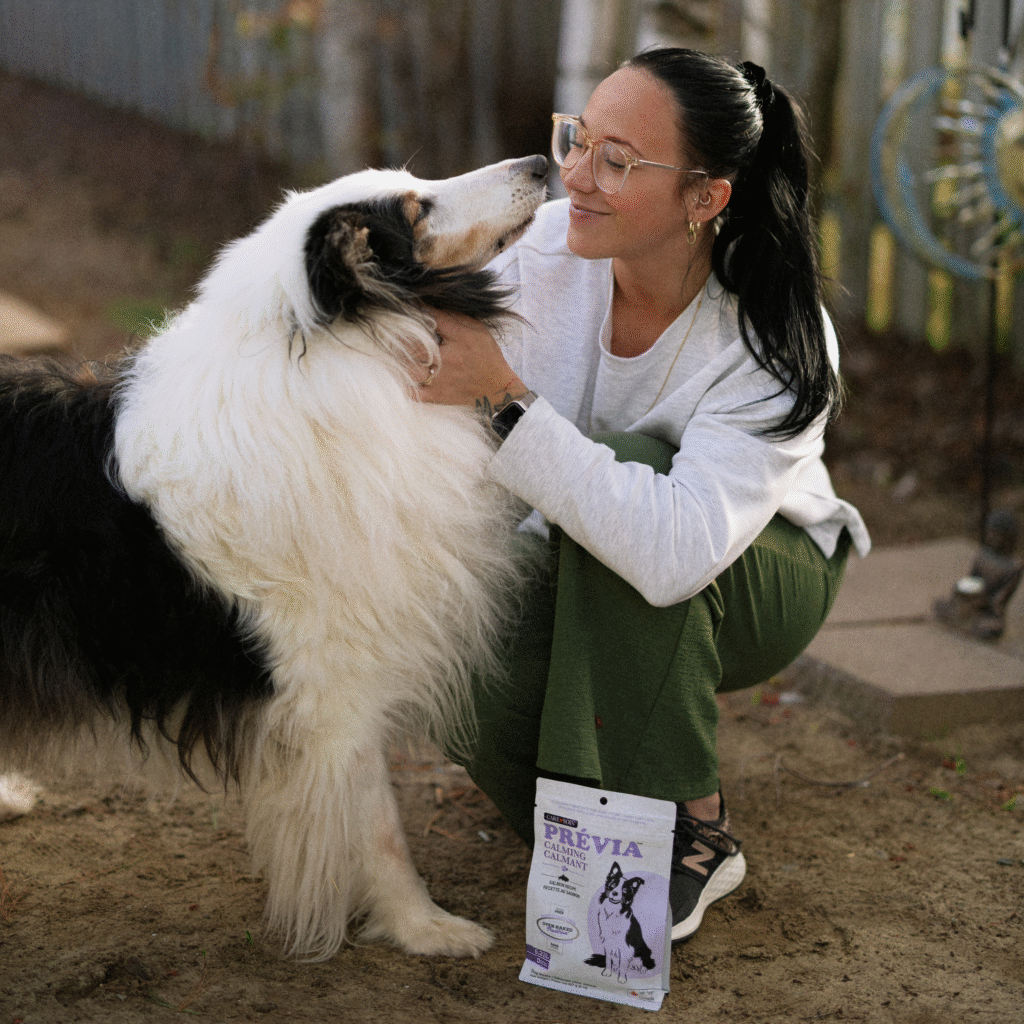
Creating a reassuring daily routine
For a dog or cat, a routine is more than just a schedule to follow. It provides familiar signals that help them understand their environment and feel safe, especially during periods of change.
Pets pay close attention to our habits. They recognize the rhythm of the day, family routines, and the little signals that tell them what is coming next. A consistent routine can become an important source of comfort, particularly during transitions like back-to-school season.
Consistent schedules can help your pet feel secure
Meals, walks, and rest periods are all opportunities to create a more predictable daily rhythm for your companion.
This does not mean every minute of the day needs to follow a strict schedule. Family life always comes with unexpected moments. The goal is simply to provide enough consistency for your dog or cat to anticipate important parts of their day.
For a dog spending more time alone after back-to-school season, knowing that a walk, meal, or their family’s return usually happens around the same time can help reduce uncertainty and create a greater sense of security.
Quality time helps strengthen your bond
Even when daily schedules become busier, small moments of connection can have a meaningful impact on your pet’s well-being.
A walk where your dog can explore new scents, a few minutes of interactive play with your cat, or simply spending quiet time together can help maintain the bond that matters so much to them.
Back-to-school season does not mean spending less time with your pet. It is an opportunity to make the moments you share more intentional. These small daily rituals help build trust and support your companion as they adjust to new routines with greater confidence.

A smoother back-to-school transition for the whole family (and your pets)
Back-to-school season is a period of change for the entire family, and your pet is part of that transition too. Even if they do not understand why schedules are changing or why the house becomes quieter during the day, they notice these new patterns and look for ways to adjust.
With a little preparation, patience, and consistency, you can help make this transition easier for your dog or cat. A reassuring routine, quality time together, an environment adapted to their needs, and complementary solutions can all contribute to supporting their emotional well-being.
Every pet is unique. Some will adjust within a few days, while others may need more time to feel comfortable with their new routine. The most important thing is to observe your companion, respect their pace, and support them with patience and care.
After all, back-to-school season is not only about returning to a new schedule. It is also an opportunity to create new daily rituals with your pet and continue strengthening the special bond you share.
Support your dog’s well-being with Prévia Calming Treats.
Find a retailer near you today.
FAQ: Stress, Anxiety and Back-to-School Routine for Dogs and Cats
The back-to-school season often brings several changes to the family’s routine. Children return to school, parents go back to their regular schedules, and the house suddenly becomes much quieter. After spending more time with their family during the summer, some pets may need a period of adjustment to get used to their new routine.
Signs of stress in dogs may include more frequent barking or whining when left alone, restlessness, difficulty settling down, destructive behaviors, changes in appetite or digestion, and significant changes in energy levels. If these signs persist or become more severe, it is recommended to discuss them with an animal health professional.
If your dog spent a lot of time with you during the summer, gradually get them used to being alone again. Start with short periods and slowly increase their duration. Keep departures and arrivals calm and natural. Interactive toys, scent games and appropriate chewing activities can also help make time alone a more positive experience.
Gradually reintroduce the habits associated with the back-to-school season, including wake-up times, mealtimes, walks and rest periods. A predictable routine can give your pet familiar reference points that may help them manage change more easily. There is no need to follow every minute of the day perfectly. The goal is simply to provide enough consistency.
A stressed cat may hide more often, become more vocal, lose interest in certain activities, or change their eating, litter box or grooming habits. Since every cat is different, it is important to know your cat’s usual behavior and pay attention to sudden changes.
A consistent routine, a reassuring environment, mental stimulation and appropriate activities can all contribute to your pet’s well-being. Certain complementary solutions, such as calming pheromones or functional calming treats, can also be incorporated into a broader approach to support your pet during periods of change.
Prévia Calmant is a grain-free functional treat designed to support dogs during periods when they may experience increased stress, including changes in routine, travel or periods of separation. It can be incorporated into a broader approach that includes a consistent routine, a reassuring environment and appropriate activities.
A functional treat can be incorporated into a dog’s routine during periods when they may experience increased stress. Oven-Baked Tradition’s Prévia Calmant is a grain-free treat formulated with functional ingredients, including L-tryptophan, chamomile, ginger, natural sweet orange extract and a yeast culture. It also contains fresh salmon as the first ingredient.