
Operant conditioning is based on a strong logic: an animal will repeat a behaviour if it feels good and will avoid a behaviour that does not feel good. Most people know about using corrections and punishments, and more and more people know about the effect of positive reinforcement. But is it all there is?
Understanding Operant Conditioning in Dogs
Operant conditioning explains how dogs learn from the consequences of their actions. A behavior followed by a positive outcome is more likely to be repeated, while a behavior associated with an unpleasant consequence tends to disappear.
In dog training, this principle helps reinforce desired behaviors and reduce unwanted ones in a consistent and intentional way. It forms the foundation of modern training methods focused on motivation, clarity, and the well-being of the dog.
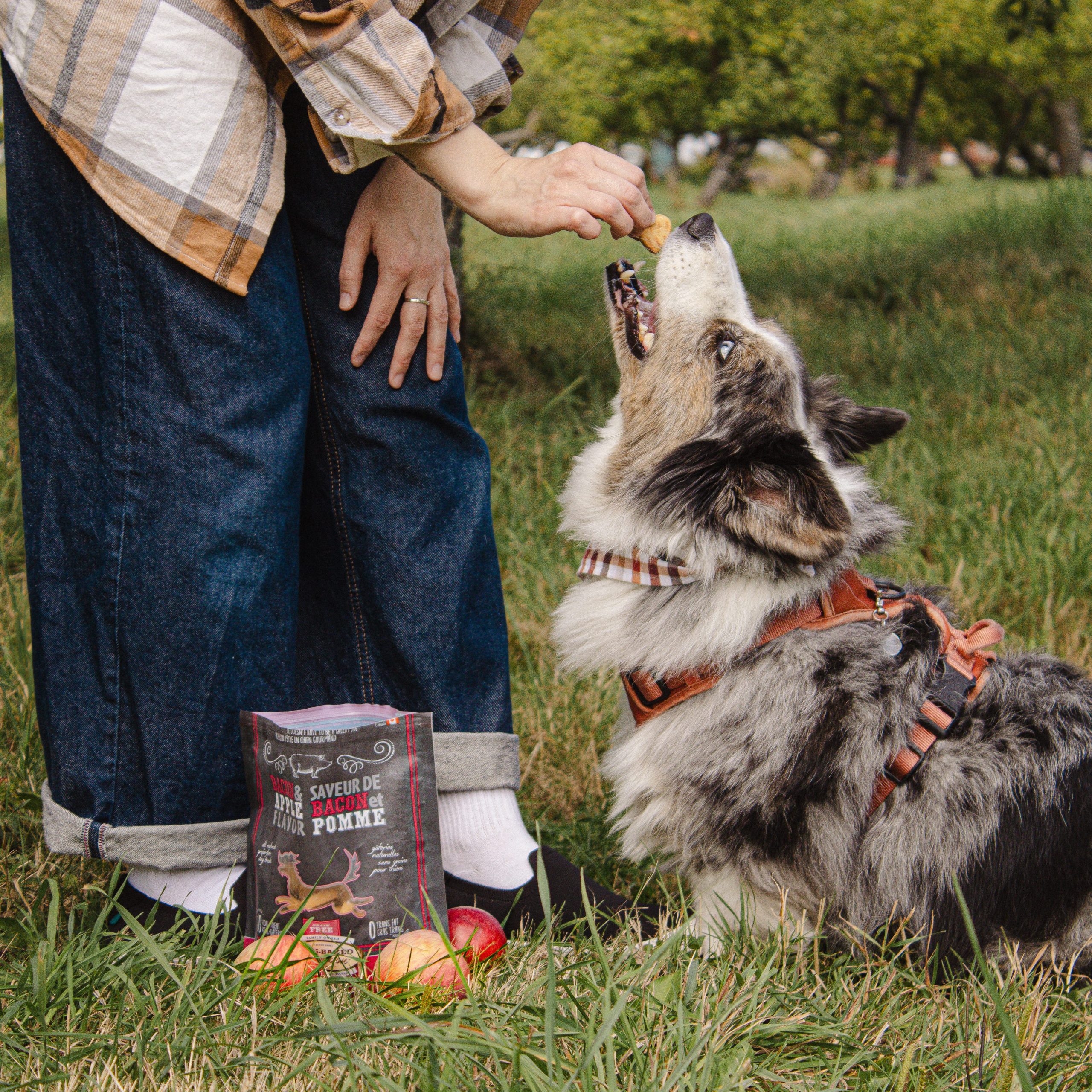
For example, when a dog sits on command and receives a treat, it associates the behavior with a positive outcome. As a result, the dog is more likely to sit again in similar situations.
The Four Quadrants of Dog Training
Operant Conditioning works in 4 different quadrants:
1) Positive Reinforcement: A good action is rewarded with a good consequence, for example treats, attention or toys.
2) Negative Punishment: When a “bad” behaviour happens, something good is removed. For instance, pulling to go see a doggy friend results in not moving forward anymore or having the doggy friend leave.
3) Positive Punishment: A “bad” behaviour results in an addition of a bad consequence, like leash jerking.
4) Negative Reinforcement: A good action is rewarded with the removal of a negative action. For instance, a dog with a choke collar gets released around his neck from not pulling.
Positive dog training usually means that the trainer uses “positive reinforcement” and “negative punishment” in his training tool boxes: good behaviours are rewarded and bad ones are not reinforced, while another more appropriate behaviour is taught.
Why Positive Reinforcement is Recommended Today
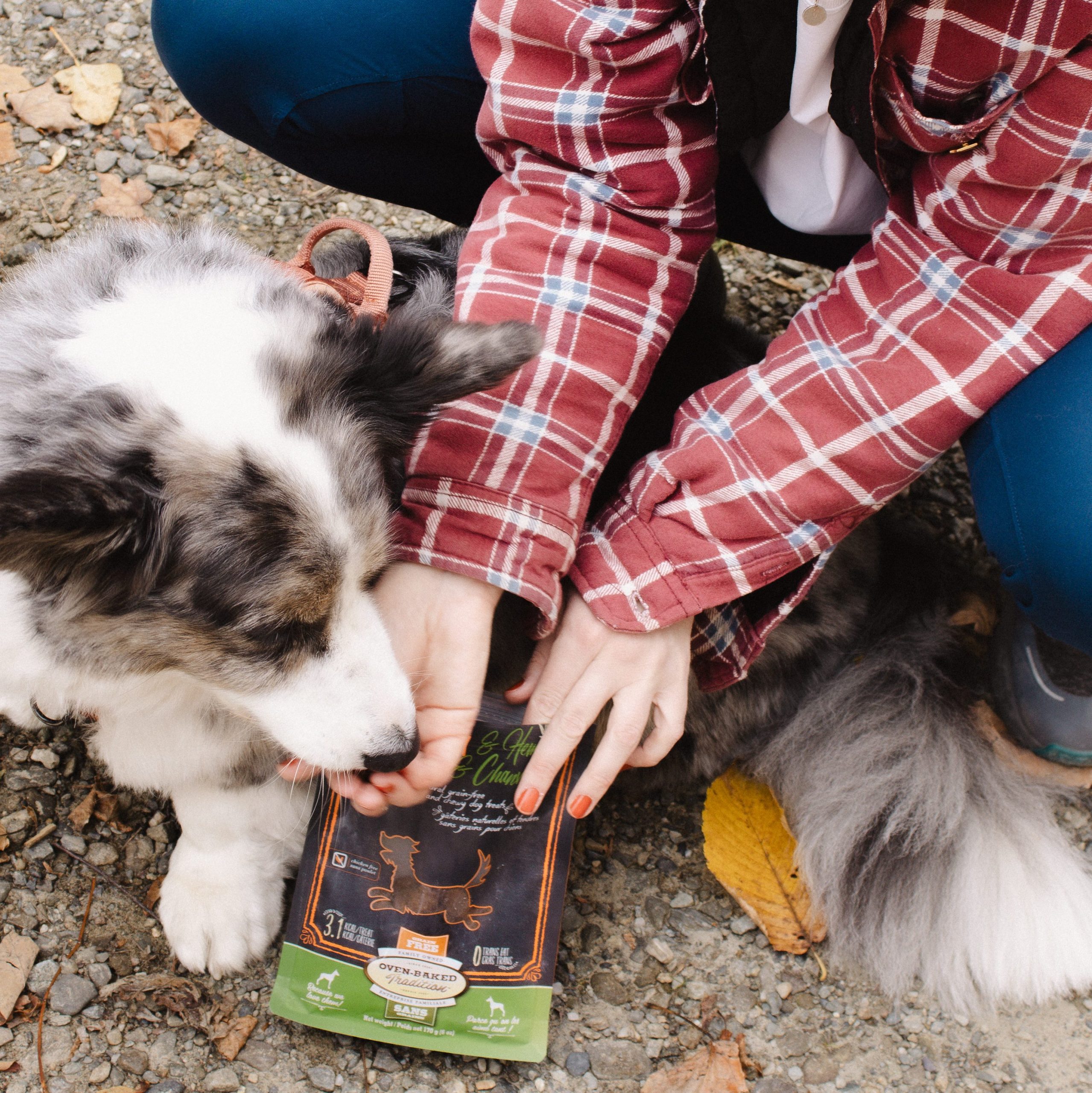
Positive reinforcement is now the preferred method for dog training, and for good reason. First, it is effective and motivating: dogs learn more quickly when they associate desirable behaviors with a pleasant reward, such as a treat, a toy, or affection.
It also strengthens the bond between humans and dogs, because learning takes place in a climate of trust, without fear or intimidation. Unlike punishment-based methods, it preserves the dog’s physical and emotional well-being while promoting long-lasting behaviors.
Finally, positive reinforcement is suitable for all dogs, regardless of age, temperament, or experience level, making it the modern, recommended approach endorsed by most professional dog trainers.
On the other hand, punishment-based methods may seem effective in the short term, but they carry significant risks. They can cause fear, stress, or anxiety, undermining the dog’s trust in its owner. They can also lead to aggression or unpredictable behaviors, making training less sustainable. This is why modern dog trainers favor safe, respectful methods based on positive reinforcement.
When you meet a dog trainer or handler, don’t hesitate to ask which training quadrant their techniques focus on. Their answer will quickly give you an idea of their approach and training philosophy. If they are unfamiliar with the concept, it can also help you assess their methods and level of experience.
Ready to start training your dog?
Discover our Oven-Baked Tradition treats and begin rewarding good behaviors today!
Find a store near you.