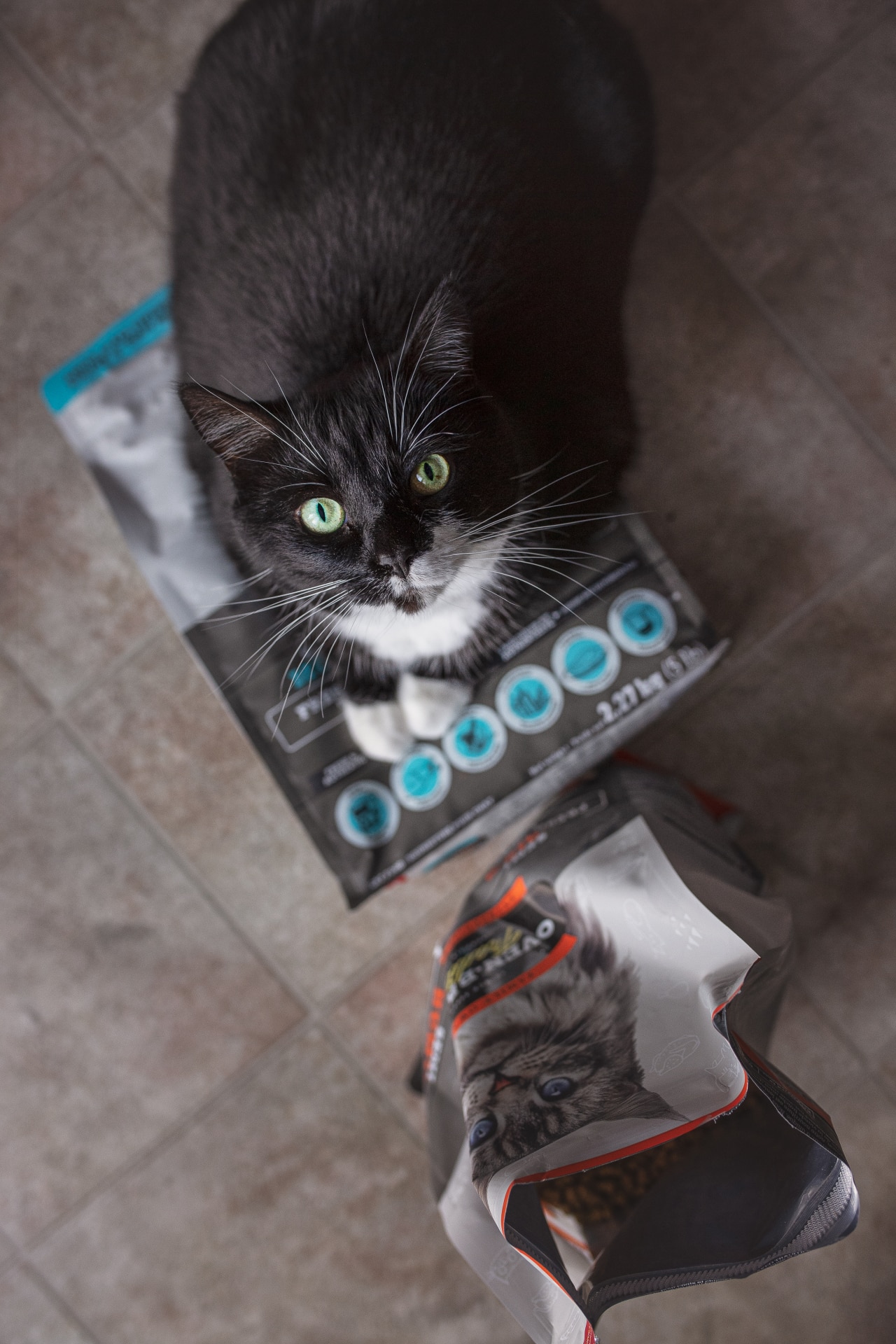
Urban life has quietly reshaped how Canadians live with their pets. In cities like Toronto, Montreal, Ottawa, Vancouver, and Hamilton, apartment and condo living is no longer the exception; it is the norm. And with that shift, indoor cats have become part of everyday urban life.
According to Statistics Canada, 19% of urban households share their living space with at least one cat. But behind the numbers, a much simpler reality emerges: cats are adapting to smaller spaces, not because they have to, but because the way we live is changing.
At Oven‑Baked Tradition, this is something we see every day. In conversations with pet parents across Canadian cities, a consistent pattern appears. Cats do not struggle with apartments because of their size. They struggle when their world lacks rhythm, structure, and stimulation.
A small space, when thoughtfully designed, can feel complete to a cat. What matters is not square footage, but how life is organized inside it.
This guide is built around that idea.
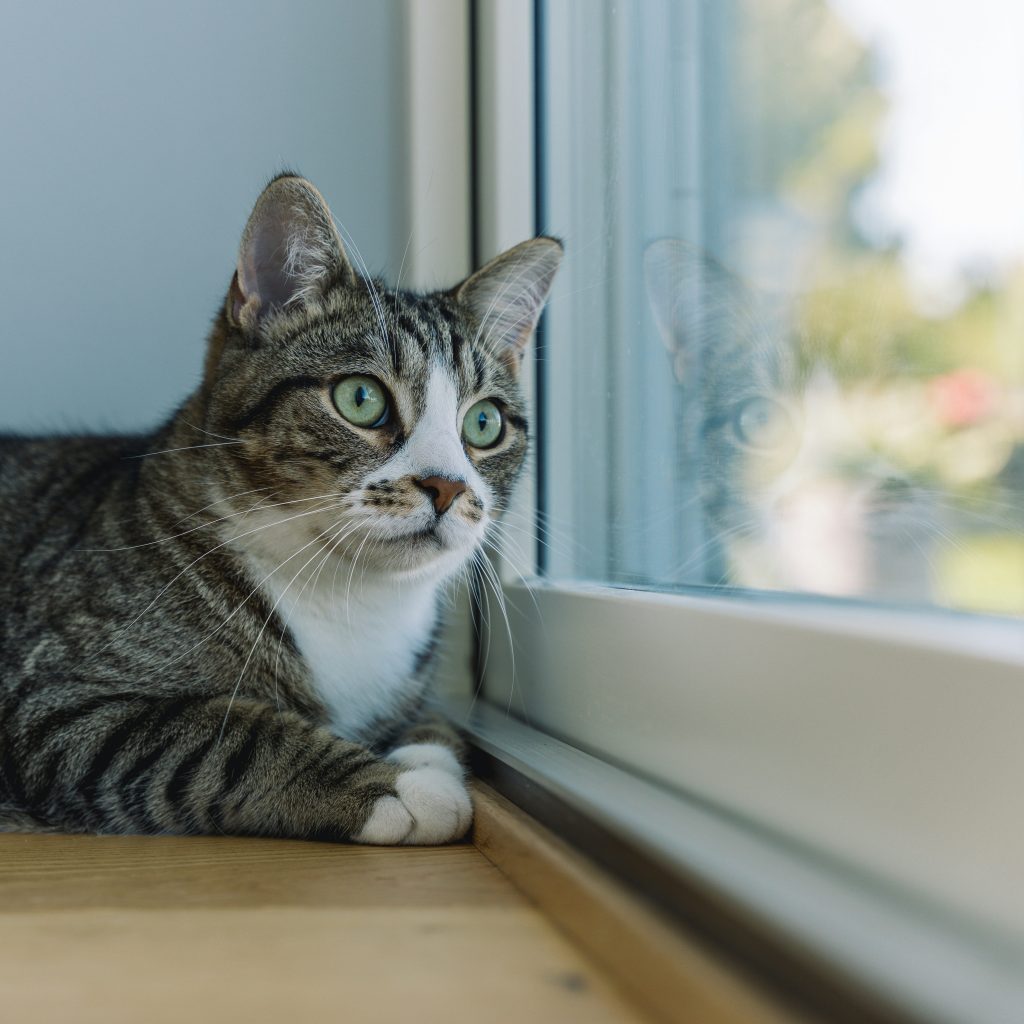
What makes an indoor cat happy in an apartment?
Understanding indoor cat happiness starts with recognizing that cats living in urban environments rely almost entirely on how their home is structured and how their daily routine is built. In city apartments, a cat’s well-being is shaped less by available space and more by stimulation, predictability and emotional security.
What are the signs of a happy indoor cat?
A happy indoor cat is calm, curious, and behaviorally stable. They show consistent appetite, regular grooming, and balanced activity throughout the day. They alternate naturally between rest and play, and they explore their environment with confidence rather than hesitation.
These signs help establish a clear baseline for emotional well-being. Once you recognize what stability looks like, it becomes easier to identify what supports or disrupts it.
Some cats also have a very Garfield-like side, with a clear love for comfort, cozy spots, and long naps. While this behavior is completely normal, a lack of interest in periods of activity or play can also be a sign that they may need a little more stimulation or variety in their daily routine.
The three elements that shape indoor cat well-being
Across different environments, three foundations consistently shape how cats adapt to indoor life:
- A space that offers vertical access, hiding spots, and visual stimulation
- A daily rhythm that stays predictable, especially around feeding and rest
- Opportunities for mental stimulation through play and exploration
When one of these is missing, the change is usually noticeable. Not immediately, but in behavior over time.
Space itself rarely becomes the limiting factor. The structure of that space does.
Managing indoor cats when you work long hours
Many cat owners spend long hours away from home. The good news is that indoor cats adapt well to alone time when their environment is structured properly.
Rather than treating loneliness, time alone, and separation anxiety as separate issues, it is more accurate to see them as one connected system involving routine, stimulation, and emotional security.
When these elements are aligned, most indoor cats remain stable during long workdays.
How to manage alone time and separation anxiety in cats
Most adult indoor cats can comfortably stay alone for 8 to 10 hours when their basic needs and stimulation needs are met. Beyond that, environmental quality becomes even more important, as small gaps in routine or stimulation tend to become more noticeable over longer periods.
Separation-related stress is usually reduced through consistency rather than intensity. Cats respond strongly to predictable routines, and small daily patterns often matter more than occasional bursts of attention.
In practice, we often see that stability comes from a few simple but reliable habits:
- keeping consistent departure and return routines
- using food puzzles or slow feeders to extend engagement throughout the day
- creating safe zones for rest and quiet observation
- providing vertical spaces such as cat trees or shelves that allow cats to have a better view of and feel more in control of their environment
Together, these elements help the cat feel more in control of its space, even when no one is home.
Want to know more about separation anxiety, we explore this topic in more depth in our guide on cat separation anxiety and stress in indoor environments, including early signs to watch for and practical ways to support long-term emotional stability.

Preventing boredom in indoor cats
Boredom is one of the most common but misunderstood issues in indoor cats. It is often mistaken for misbehavior, when it usually reflects a lack of stimulation and novelty.
When boredom builds up, it can affect both behavior and energy levels.
What are the signs of boredom in cats?
Common signs include:
- An unusual increase in sleep or a decreased interest in play
- Over grooming or repetitive behaviors
- Attention seeking patterns
- Sudden bursts of hyperactivity
- Destructive scratching
These signals usually indicate unmet stimulation needs rather than behavioral issues.
How to keep a cat mentally stimulated
Mental stimulation should always mimic feline natural instincts. Cats are hunters by nature, so enrichment should reflect that.
Effective strategies include:
- Interactive play sessions using wand toys
- Food puzzles that require problem-solving
- Rotating toys regularly to maintain novelty
- Window access for visual stimulation such as birds or movement
Toys alone are not enough. What matters is variety, interaction, and consistency.
Creating a safe and calm apartment environment
Once stimulation and boredom are addressed, the next layer of well-being is emotional safety. In Canadian cities, indoor living is standard, so the home environment becomes the cat’s entire world.
A calm cat is not only stimulated, it is also secure.
What creates emotional safety for indoor cats?
Cats feel safe when they can predict their environment and control their level of exposure.
Key elements include:
- Quiet resting zones away from activity
- Vertical spaces for observation and control
- Hidden or enclosed areas for retreat
- Stable and consistent daily routines
What are common stress triggers in apartments?
Urban apartments can introduce stress through:
- Sudden loud noises or construction
- Frequent visitors or changes in environment
- Lack of hiding spaces
- Tension in multi-pet households
Cats adapt over time, but only when they have access to safe retreat zones.
A well-designed apartment reduces stress not by removing stimulation, but by balancing it with control.
Daily play and interaction
Daily play is one of the most effective ways to maintain both physical and emotional balance in indoor cats. In fact, it plays a role that goes far beyond simple entertainment, as it replaces many of the natural hunting cycles that outdoor cats would normally experience.
For most indoor cats, consistency is more important than duration. Two short play sessions a day, lasting about 10 to 15 minutes each, can generally help maintain a healthy balance, prevent boredom and manage excess energy.
The most effective type of play is the one that mimics natural prey behavior. This includes movement-based chasing, interactive wand toys with unpredictable motion and short bursts of activity followed by rest periods. These patterns are important because they replicate the instinctive sequence of hunt, catch, and rest that cats are biologically programmed to follow.
When play is structured this way, it supports both physical health and emotional stability, while also strengthening the bond between cat and owner.
Can indoor cats be happy without outdoor access?
Indoor cats do not require outdoor access to live full and healthy lives when their environment is properly structured.
A fulfilling indoor life depends on:
- Predictable routines
- Environmental enrichment
- Mental stimulation
- Social interaction
Outdoor access, if offered, should always be controlled through safe alternatives, like harness walks or enclosed spaces.
Nutrition and indoor cat happiness
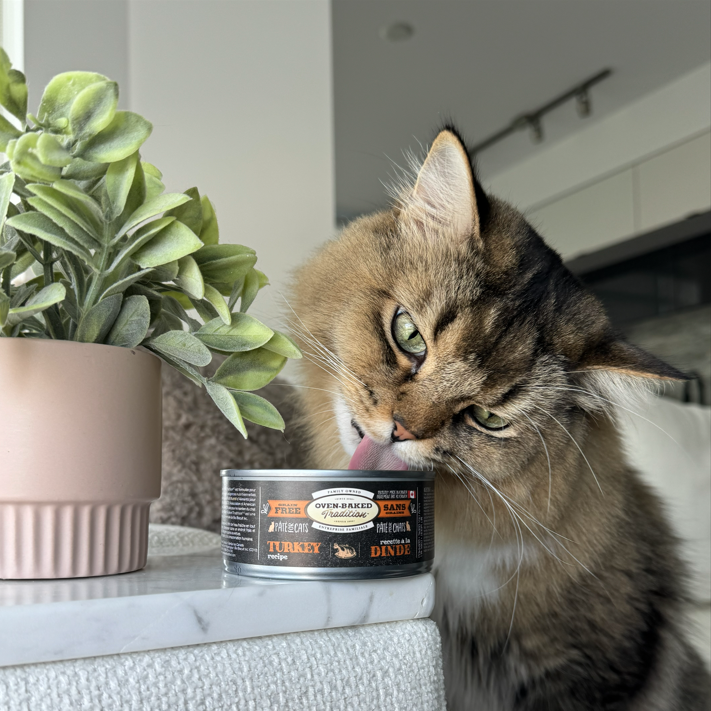
Nutrition is one of the most underestimated factors in indoor cat well-being. At Oven‑Baked Tradition, we regularly see how a well-suited diet can help maintain healthy energy levels and support a cat’s overall well-being. In indoor environments where stimulation and routine play a central role, nutrition becomes a key foundation for overall balance.
Nutrition needs of indoor cats
Indoor cats may have lower activity levels. Their diet should, therefore, be adapted to their energy needs while still providing the essential nutrients they need to stay healthy.
Choosing a balanced combination of dry food and wet food formulas can also help support better hydration while adding more variety to a cat’s diet.
When these nutritional elements are balanced, indoor cats tend to show more stable energy levels and a more consistent daily rhythm.
How nutrition influences behavior and activity
Diet can influence how indoor cats behave throughout the day. When a diet is not properly balanced, it can lead to energy fluctuations, reduced interest in play, and, in some cases, irritability or lethargy.
On the other hand, a stable and well-balanced diet supports predictable energy levels, which helps reinforce positive behaviors such as regular play, exploration and calm rest periods. This is particularly noticeable in indoor cats whose activity patterns are strongly influenced by feeding routines and nutrient quality.
It is also important to remember that long-term dietary imbalance can contribute to weight gain, which is one of the main risk factors associated with metabolic conditions in cats. For a deeper look at how excess weight can affect feline health, including its link to diabetes, you can refer to our detailed guide on obesity and diabetes.
Feeding routines that support emotional stability
Beyond what cats eat, how they are fed plays an important role in their well-being. A structured feeding routine helps reinforce a sense of stability in their environment.
This includes consistent mealtimes, controlled portions adapted to their lifestyle, and occasional enrichment feeding through tools like puzzle feeders. These small variations introduce mental stimulation while maintaining a predictable daily rhythm.
For many indoor cats, combining structured feeding with both dry and wet food options can also help maintain interest in meals while supporting overall hydration and satisfaction levels.
Over time, feeding becomes more than nutrition. It becomes part of the emotional structure that supports a calm and balanced indoor life.
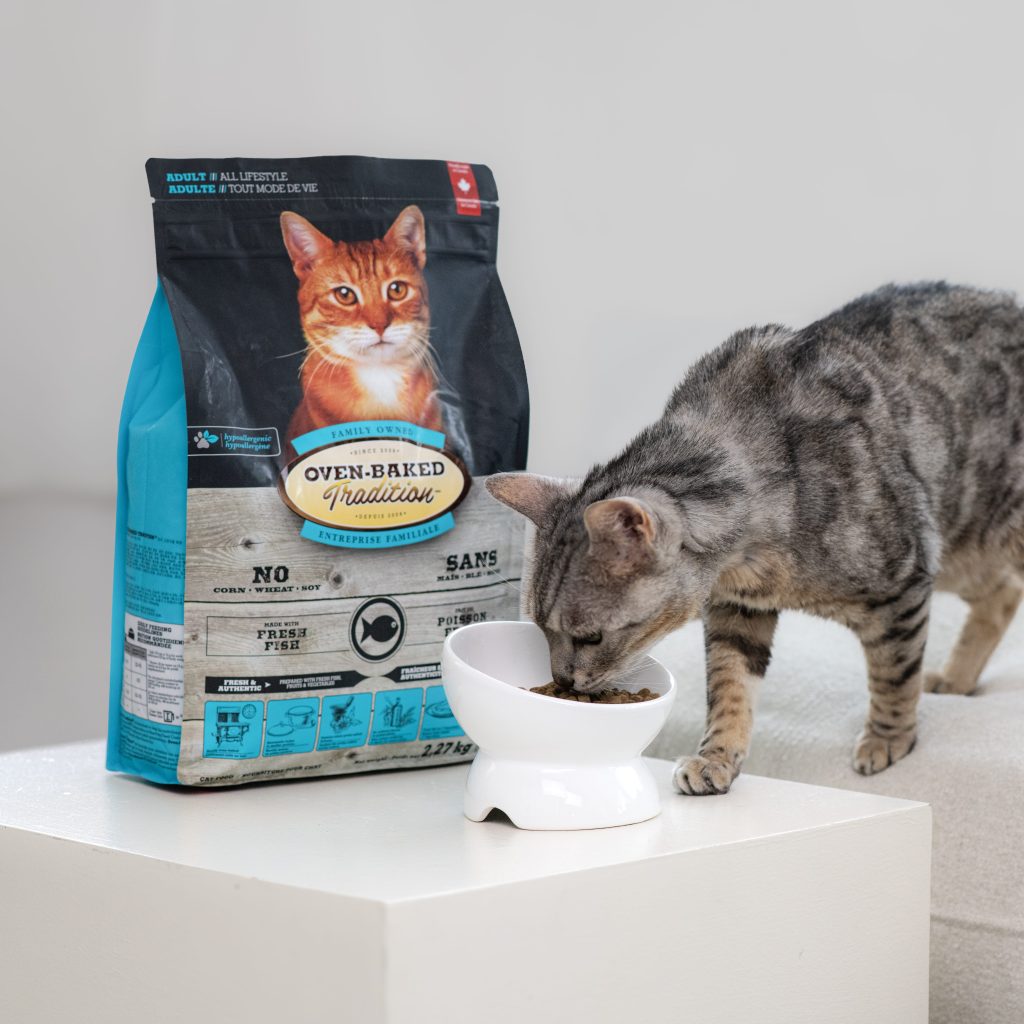
How to create a cat-friendly apartment environment
As we saw in the previous section, a happy indoor cat is not defined by space, but by structure, stimulation, and emotional security. Once these foundations of feline well-being are understood, the next step is to translate them into the physical environment of the home.
Living with a cat in a small apartment is not about how much space is available, but about how that space is organized. In urban Canadian homes, especially in cities like Toronto, Montreal, Vancouver, and Ottawa, cats adapt extremely well when their environment is structured around their natural behaviors. Climbing, resting, observing, and scratching are all part of their instinctive needs, and a well-designed apartment simply makes room for these behaviors in a limited footprint.
The goal of a cat-friendly apartment is not to expand space, but to create clear functional zones that support comfort, stimulation, and routine stability. Once this foundation is in place, certain undesirable behaviors may be less frequent.
Designing for real space needs
Indoor cats do not require large homes, but they do need environmental diversity. What matters is not how much space is available, but how that space is used. Even compact condos can feel rich and stimulating when they include vertical access, quiet rest areas, and opportunities for movement and observation.
Instead of focusing on expansion, the goal is to create functional zones that support a cat’s daily rhythm.
Using vertical space to support natural behavior
Vertical space is one of the most effective ways to enrich a small apartment. Cats naturally seek height for security, observation, and rest. Adding cat trees, shelves, or window perches allows them to express these instincts even in limited living spaces.
This approach does not require large renovations. It simply requires understanding that cats experience space in three dimensions rather than two.
Where should you put a litter box in a small apartment?
Litter box placement plays a central role in maintaining both hygiene and comfort in small living spaces. In apartments, especially in dense urban environments, the way the litter box is integrated into the home could influence a cat’s sense of security as well as the overall cleanliness of the environment.
From a behavioral perspective, cats naturally seek quiet, low traffic areas where they can use their litter box without feeling exposed or interrupted. This need for privacy is an important factor to consider when designing a cat-friendly apartment, as it directly impacts litter box consistency and avoidance behaviors.
A well-structured placement strategy focuses on balancing accessibility for the cat with practicality for the household. In most cases, litter boxes should be placed away from feeding areas and from noisy appliances or high activity zones. Once a suitable location is established, consistency becomes more important than constant optimization, as frequent changes can create stress or lead to avoidance behavior.
In multi-cat households or larger condos, providing more than one litter box can also help reduce territorial tension and support better hygiene habits across the home. This simple adjustment often improves both cleanliness and behavioral stability.
Cleanliness remains a core component of litter box success. Regular maintenance, appropriate litter selection, and proper ventilation all contribute to reducing odors and maintaining a more comfortable indoor environment. While air purifiers can help reduce airborne particles and mild odors, they are most effective when used alongside consistent cleaning routines rather than as a standalone solution.
For a more detailed guide on setting up the litter box when introducing a cat to a new home, you can read our article on where to place a litter box in a new home and how to help cats adjust smoothly.
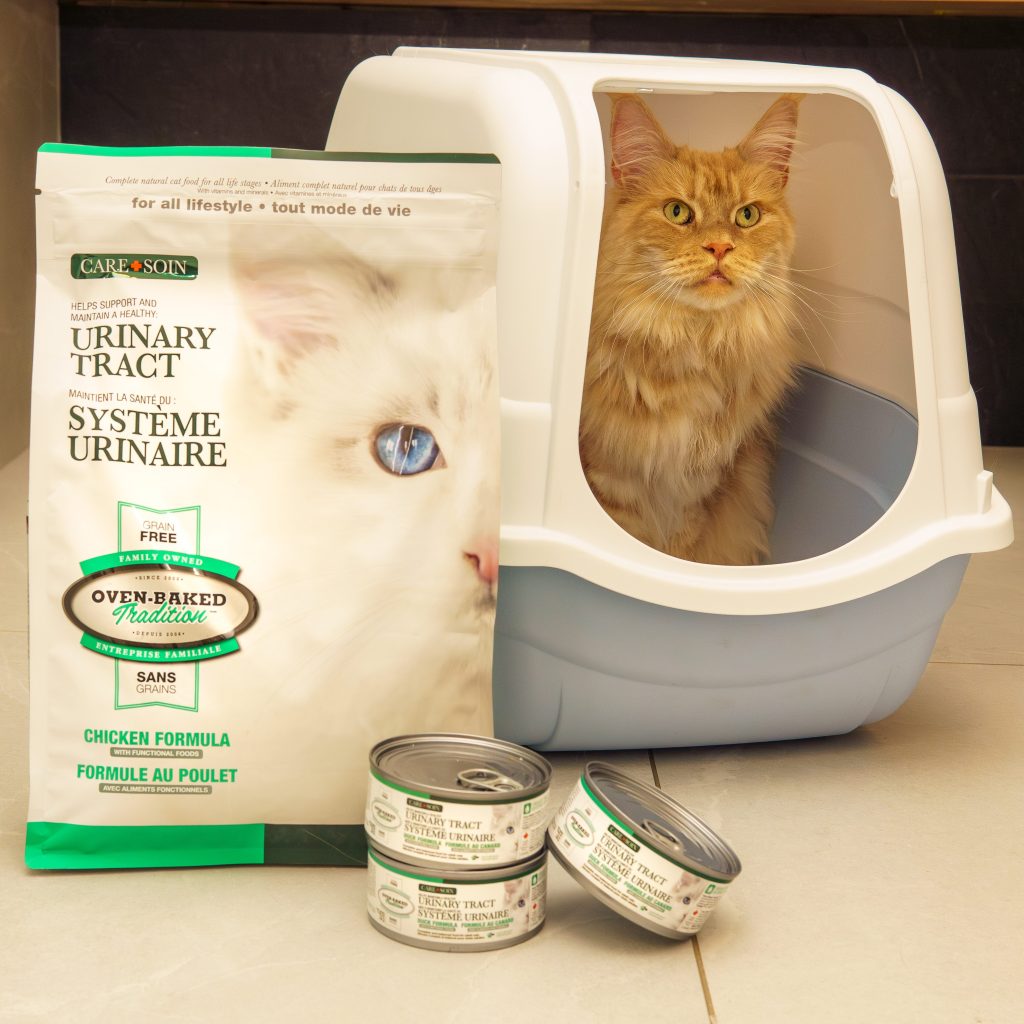
How do you stop a cat from scratching furniture in an apartment?
As we move from structuring the apartment environment to managing everyday behaviors, scratching is one of the most common concerns for cat owners living in small spaces. We know that the condition of your furniture can be frustrating, especially when it feels like your cat is targeting specific areas of the home. The good news is that this behavior is completely natural and can be redirected with the right approach.
Scratching is an essential feline behavior used for marking territory, maintaining claw health, and stretching muscles. Because of this, the goal is not to eliminate it, but to guide it toward appropriate surfaces within the home.
At Oven‑Baked Tradition, we often remind pet parents that behaviors like furniture scratching are rarely “bad behavior.” In most cases, they reflect an environment that is missing the right combination of stimulation, structure, or suitable outlets for natural instincts.
Understanding scratching behavior
Cats usually choose furniture because it is convenient, stable, and offers a texture that feels satisfying to them. In many cases, it is not a behavioral problem, but simply the most accessible option in their environment.
Understanding this instinctive logic is an important shift. It moves the solution away from correction and toward environmental design, which is far more effective in the long term.
Redirecting scratching in a sustainable way
The most effective long-term strategy is to provide alternatives that feel just as natural and attractive as the furniture itself. Scratching posts or boards should not feel like separate accessories, but like integrated parts of the cat’s environment.
Placement is key. These alternatives should be positioned where the cat already spends time or where scratching behavior is occurring, so the new habit replaces the old one rather than competing with it.
Positive reinforcement when the cat uses these alternatives is significantly more effective than punishment. Scratching is instinctive and not reactive, and cats respond much better to repetition and reward than to correction.
Keeping a small apartment clean with a cat
Living with a cat in a small apartment does not require a spotless home, but rather a few consistent habits that help maintain a comfortable environment for both the cat and the household. Regular grooming is one of the simplest ways to reduce shedding and limit the accumulation of hair on furniture and fabrics. Combined with routine vacuuming and basic cleaning, it can significantly improve day-to-day cleanliness without adding much effort to a pet parent’s routine.
Air quality also plays an important role in smaller living spaces. While air purifiers can help reduce dander and mild odors, especially in less ventilated apartments, they are most effective when used alongside proper litter box maintenance and regular cleaning practices. Ultimately, keeping a small apartment clean with a cat is less about eliminating every trace of pet ownership and more about creating a healthy, balanced environment where both cats and people can comfortably share the same space.
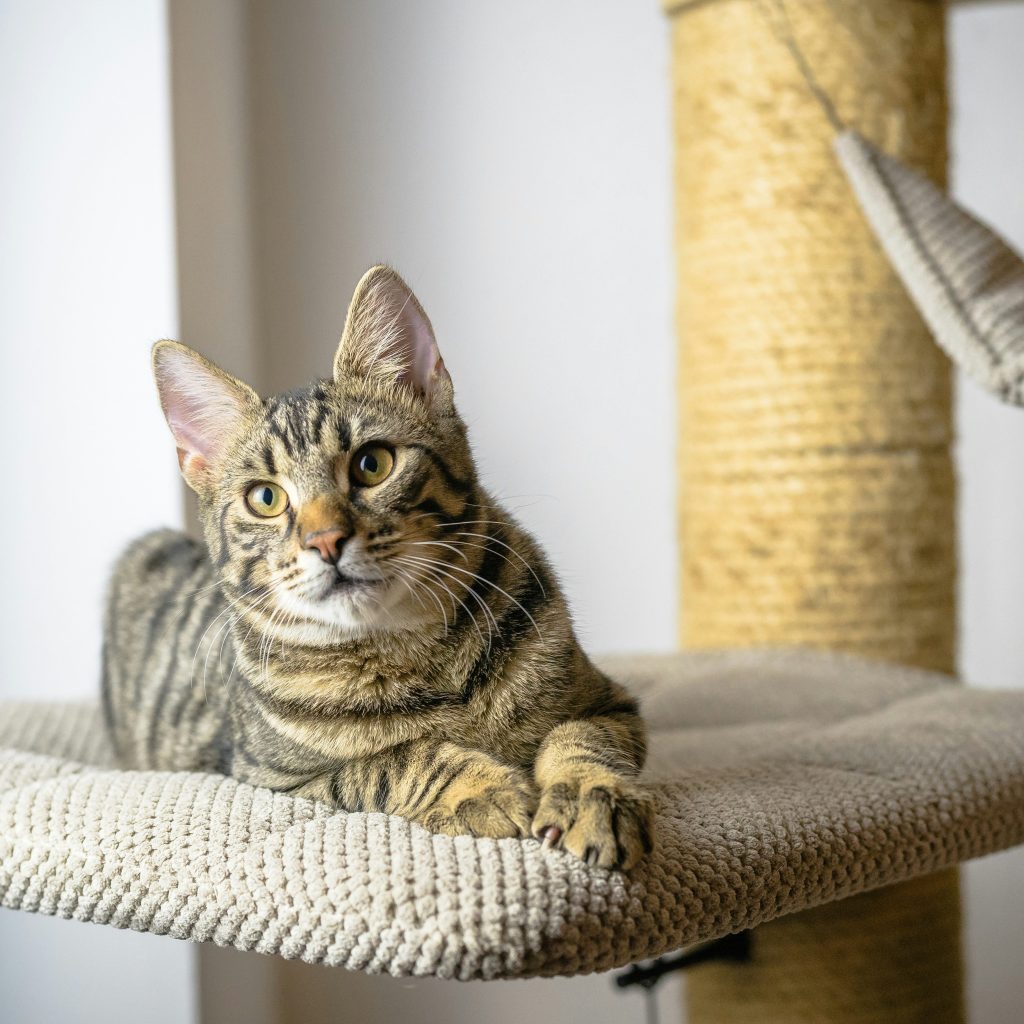
A cat-friendly apartment is not defined by size, but by structure, consistency, and an understanding of feline behavior. When vertical space, scratching alternatives, litter management, and cleaning routines are thoughtfully designed, even small urban apartments can become fully supportive environments.
At Oven‑Baked Tradition, we see every day how the right balance of the environment and nutrition helps indoor cats thrive, not just adapt, in city living conditions.
Oven‑Baked Tradition products are available at pet specialty retailers across Canada’s major cities and communities.
Find a retailer today.
FAQ — Indoor Cats in Apartments
A happy indoor cat is typically calm, curious, and behaviorally stable. They show consistent appetite, balanced sleep patterns, and engage in short bursts of play followed by rest. Confident exploration of their environment and low levels of stress behaviors are also strong indicators of well-being.
Scratching is a natural behavior used for marking territory, stretching, and claw maintenance. The goal is not to stop it, but to redirect it.
Providing appropriate scratching posts, placing them near areas where the cat already scratches, and reinforcing their use with positive reinforcement are the most effective long-term strategies. Consistency matters more than correction.
A litter box should be placed in a quiet, low-traffic area where the cat feels safe and undisturbed. It should be kept away from feeding areas and noisy appliances.
Consistency is key, as frequent relocation can create stress or avoidance behaviors. In multi-cat homes, multiple litter boxes are often recommended to reduce territorial tension.
Maintaining a fresh-smelling apartment with cats relies on consistent habits rather than quick fixes. Regular litter box cleaning, good ventilation, and routine grooming help significantly reduce odors.
Air purifiers can help reduce dander and airborne particles, but they work best alongside proper cleaning routines rather than replacing them.
Indoor cats still require core vaccinations, as some diseases can be introduced indirectly through humans, objects, or other animals. A veterinarian can determine the appropriate vaccination schedule based on lifestyle and risk level.
Yes, indoor cats can still get fleas, even without outdoor access. Fleas can enter the home through clothing, other pets, or visitors. Regular prevention and monitoring are important even for strictly indoor cats.
Indoor cat happiness depends on three main pillars: environmental enrichment, routine stability, and mental stimulation. Vertical space, predictable feeding schedules, and interactive play all contribute to a balanced indoor life.
Indoor cats generally live longer than outdoor cats due to reduced exposure to risks such as traffic, predators, and disease. Lifespan varies depending on genetics, nutrition, and overall care.
Most indoor cats benefit from two short play sessions per day, around 10 to 15 minutes each. Play should mimic natural hunting patterns, including chasing, catching, and resting phases.
Most adult indoor cats can stay alone for 8 to 10 hours if their environment is properly enriched. Beyond that, environmental stimulation and routine consistency become even more important for emotional stability.
Small apartments can be enriched by using vertical space, adding resting zones, rotating toys regularly, and creating window access for visual stimulation. The goal is to increase environmental variety, not square footage.
Excessive vocalization can be linked to boredom, attention seeking, or inconsistent routines. It is often a sign that the cat is asking for more stimulation or predictability in their daily environment.
No. Indoor cats can live fully enriched lives when their environment is structured around their natural behaviors such as hunting, climbing, and observing. Outdoor access is optional and should always be safe and controlled if provided.
Signs of stress may include hiding, changes in appetite, overgrooming, aggression, or litter box avoidance. Stress is often linked to environmental changes or lack of predictable routines.
Introducing a new cat should be done gradually, starting with a dedicated safe space, slow environmental exposure, and controlled introduction to other pets if present. Stability and patience are key during the adjustment period.