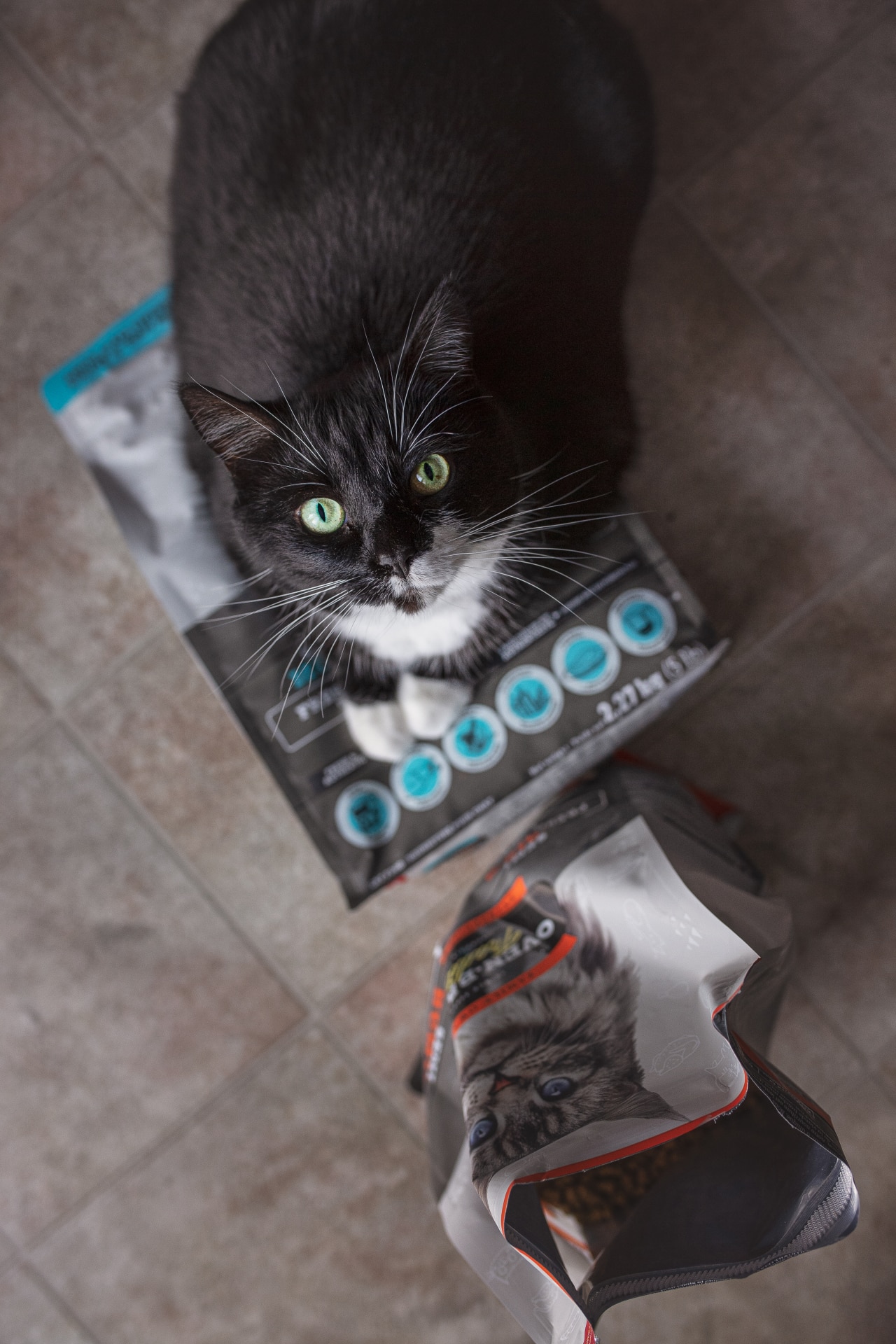
Ahh, those cute puppies! Those little bundles of fur that burst into your home with boundless energy, instantly turning your living room into a playground, your couch into a roller coaster, and your socks into scattered treasures across the floor. Not to mention those soulful eyes that melt your heart and an appetite that, honestly, seems insatiable. Beneath all that cuteness lies a big responsibility. Providing the right nutrition to help them grow healthy, strong, and happy. From day one, a crucial question arises. What should I feed my puppy to ensure they thrive? Don’t worry, we got you covered. We’re here to guide you through it without making you feel guilty when your pup looks at you with eyes that say, “I love you BUT feed me more!”
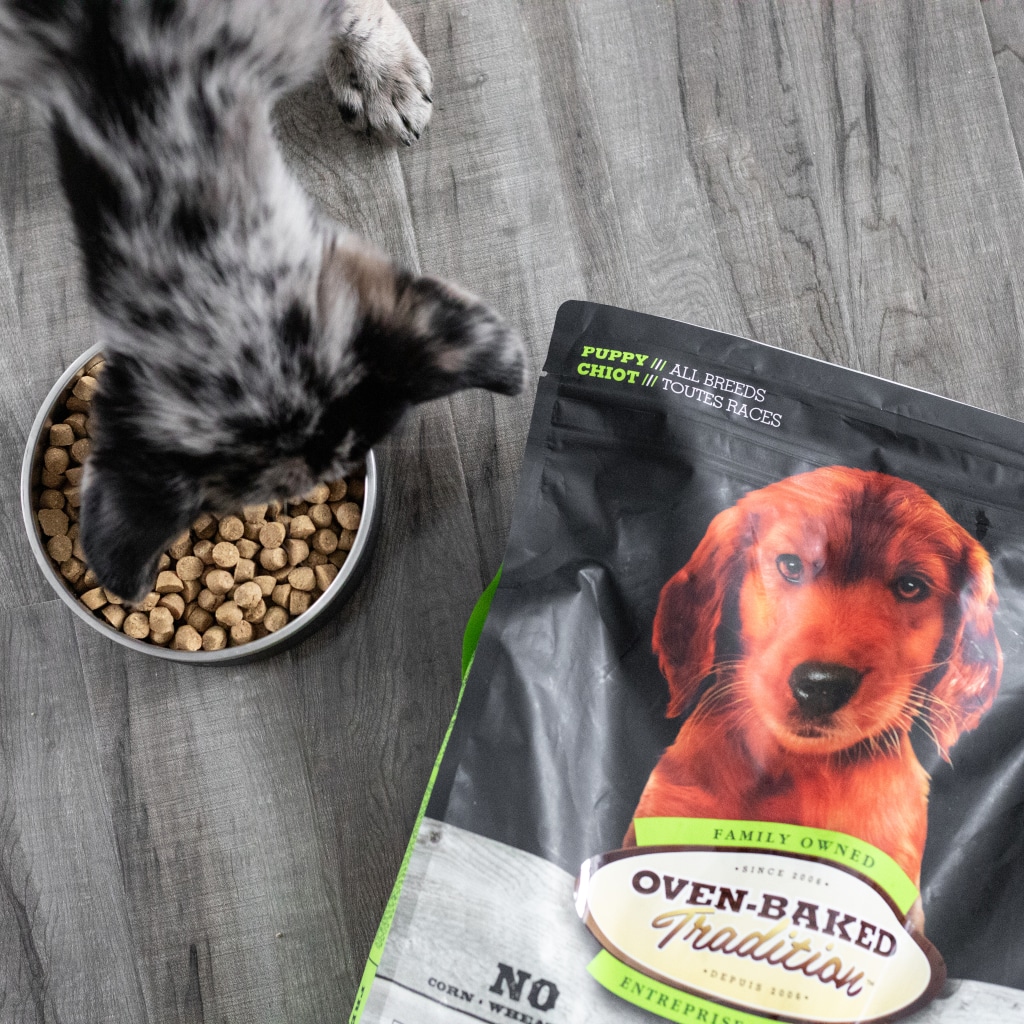
What is a puppy? When does a pup become an adult?
Before diving into kibbles and tasty bites, let’s clarify what a puppy is. A puppy is typically a dog from birth up to around 12 to 18 months, depending on the breed. Small breeds usually reach maturity around 12 months, while large breeds can continue growing until 18 or even 24 months.
Why does this matter? Because nutritional needs change as your dog grows. A growing pup requires more calories, proteins, and essential minerals to build muscles, bones, and a strong immune system. Providing the right food from the start lays the foundation for a long, healthy, and joyful life.
Why Puppy Food Is So Important
Choosing your puppy’s food is about more than taste (although seeing that little tail wag at mealtime warms your heart). It directly affects their growth, energy, digestion, and even temperament. Puppies have fast metabolism because they burn energy quickly and need perfectly balanced nutrition to support growth.
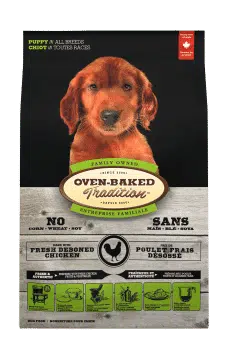
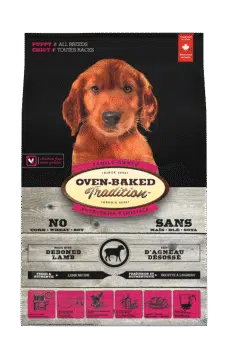
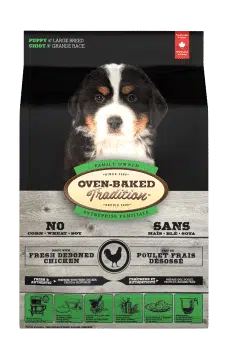
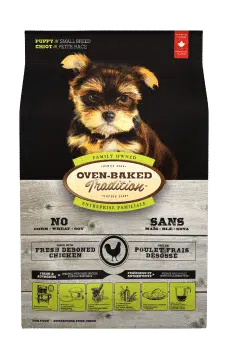
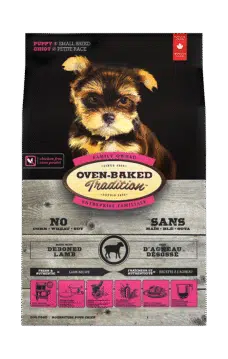
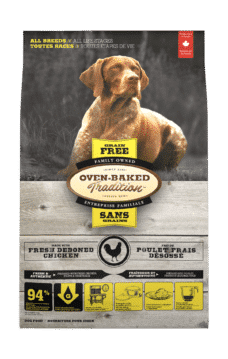
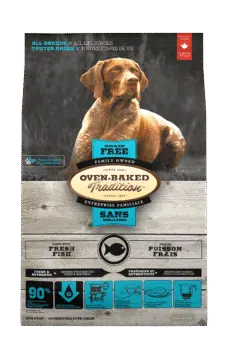
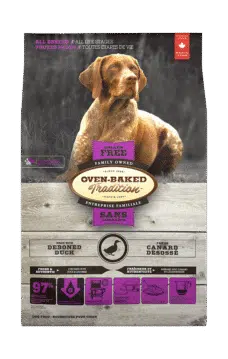
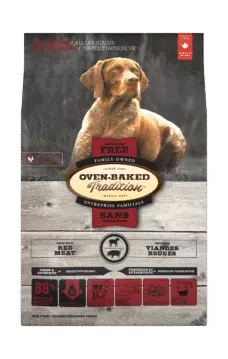
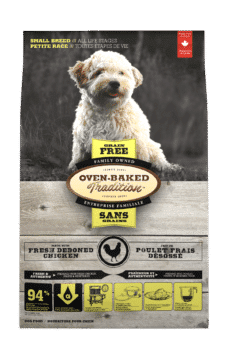
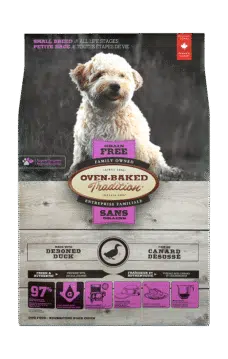
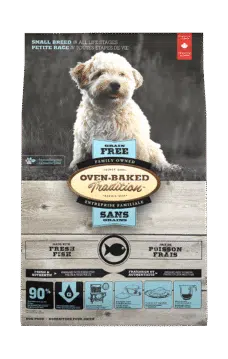
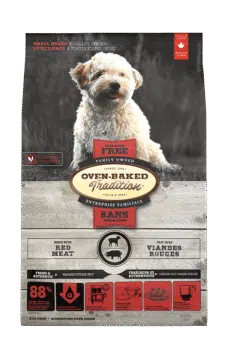
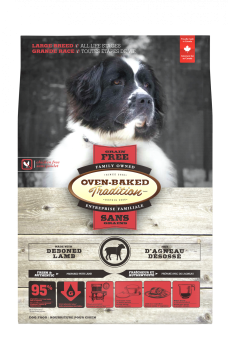
Opting for a specialized puppy formula, like Oven-Baked Tradition puppy recipes, ensures an optimal balance of proteins, fats, fibers, vitamins, and minerals, while offering a tender, flavorful texture. For pups with food sensitivities or pet parents preferring grain-free options, some Oven-Baked Tradition grain-free recipes are suitable at all life stages, supporting a smooth transition to adult food while maintaining digestion and vitality.
Puppy Food vs. Adult Dog Food
The difference is more than a label on the bag. It reflects precise nutritional needs. Puppy food is formulated for rapid growth. It contains more calories and an ideal ratio of protein and calcium for muscle and bone development. Adult dog food, on the other hand, is designed to maintain weight and overall health in mature dogs.
Feeding a puppy adult food is like sending a hungry teenager to the gym with just an apple they won’t have enough energy to grow properly. Conversely, feeding an adult puppy food regularly can lead to unwanted weight gain and excess nutrients. The good news is that Oven-Baked Tradition offers stage-specific formulas, including some grain-free options suitable for puppies with food sensitivities or adults, giving you flexibility and peace of mind.

How to Choose the Right Puppy Food
Choosing the right food can feel overwhelming. Keep these points in mind to make the best decision for your puppy.
First and foremost, protein quality is essential. Ingredients like deboned fresh chicken, fresh fish, and lamb provide highly digestible proteins that are rich in amino acids. Next, the nutritional profile must be balanced: fibers, vitamins, and minerals to support digestion, immunity, and bone growth. To learn more about what sets Oven-Baked Tradition recipes apart from other dog food, visit our The Difference page.
For puppies with sensitive stomachs, hypoallergenic or easily digestible protein formulas are ideal. Oven-Baked Tradition grain-free recipes offer a healthy option for those who want to avoid grains while still providing complete nutrition suitable for all life stages.
And, of course, palatability matters! No matter how cute a puppy is, they won’t eat food if they find it unappealing. Oven-Baked Tradition recipes combine tenderness, natural flavors, and slow-baking to deliver a true culinary experience at every meal.
Should you continue pre-adoption food?
Often, breeders provide puppy food before adoption. Should you stick with the same brand? Not necessarily, but a gradual transition is essential. Abrupt changes can lead to digestive upset, soft stools, or refusal to eat.
How to Transition Food Smoothly
Patience and gradual changes are key. Transition over 10-12 days: start with 25% new food and 75% old, then gradually increase the new portion until your puppy fully adjusts. Monitor stools and appetite. Any signs of discomfort may require a slower transition. With patience and consistency, your puppy will adjust smoothly, growing strong and healthy.
To learn more about transitioning your dog’s food and the best steps to follow, read our article “How to Switch Dog and Cat Food Successfully?”
How much and How Often to Feed Your Puppy
Amounts depend on age, size, and activity level. General guidelines:
- 2–3 months: 4 meals per day
- 3–6 months: 3 meals per day
- 6 months to adulthood: 2 meals per day
Follow the feeding guidelines on the bag and adjust based on appetite and growth. Too little energy can leave your puppy tired; too much may cause rapid weight gain. Always provide fresh water at all times!
Common Puppy Feeding Mistakes to Avoid
Some classic mistakes are easy to prevent like;
- Changing food too quickly
- Feeding table scraps or human food high in fat
- Neglecting the importance of puppy-specific food
- Underestimating the number of meals needed for growth
- Forgetting fresh water
Avoiding these pitfalls sets the stage for a healthy, happy, and energetic puppy.
Planning to bring a new puppy home soon? Discover all the essentials to prepare for their first days with our article “The New Puppy Checklist: Preparing Your Home for a Puppy.”
The Importance of Love and Routine
Beyond food, remember your pup needs love, security, and a stable routine. Mealtime becomes a moment for learning, bonding, and shared enjoyment. Using tasty, appropriate recipes strengthens this unique bond between you and your pup.
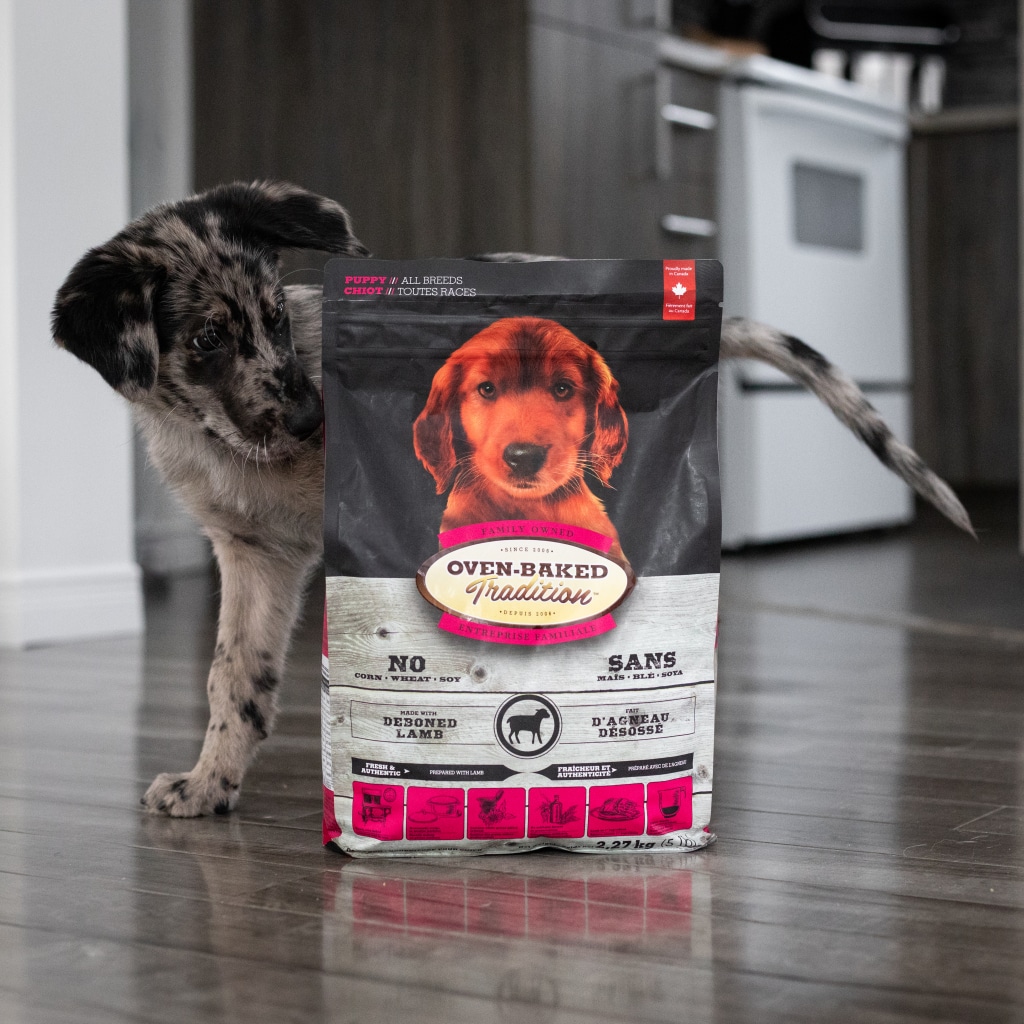
The Choice That Makes a Difference, One Bite at a Time
Feeding your puppy isn’t just filling a bowl. It’s an act of love and care. It gives your little companion the best possible start in life. Proper nutrition supports growth, energy, and long-term health, while giving you peace of mind. With the right information and a bit of patience during transitions, you’re ready to watch your puppy grow strong, happy, and irresistibly adorable. Enjoy every “awww” moment at mealtime!
Give your puppy a tasty and balanced diet.
Find an Oven-Baked Tradition retailer near you and take the first step toward a long, healthy life for your companion.



FAQ: Everything you want to know about puppy food
The amount depends on several factors: the puppy’s age, breed, adult size, and activity level. Puppies in full growth need more energy than adult dogs. Always follow the feeding guidelines on the bag and adjust slightly based on your puppy’s appetite, body condition, and growth.
No, it’s not recommended. Cat food is formulated for feline nutritional needs and generally contains more protein and minerals. Feeding it regularly to a puppy can cause nutritional imbalances and digestive issues.
The transition to adult food mainly depends on the breed’s size. Small breeds usually switch around 12 months, while large breeds may wait 18–24 months. A gradual transition over several days is recommended to avoid digestive problems.
It’s generally not recommended. Puppy formulas are higher in calories, protein, and certain minerals to support growth. For an adult dog, this can lead to excess energy intake and potential weight gain or nutritional imbalances.
Not necessarily. Both grain-free and grain-inclusive formulas provide complete and balanced nutrition. Grain-free recipes may be a good option for sensitive puppies or those with food intolerances, but they are not required for all.
Food transitions should always be gradual to prevent digestive upset. Over 12 days, slowly mix the new food with the old food, increasing the proportion of the new food each day. Monitor your puppy’s appetite, energy, and stool quality during this period.
Young puppies need more frequent meals to support their rapid growth. Generally, 4 meals per day are recommended until about 3 months, then 3 meals until around 6 months. After that, most puppies can switch to 2 meals per day until adulthood.
A puppy may eat less due to stress, a change in environment, or a food transition. Ensure the food is fresh and offer small portions at regular times. If appetite loss lasts or comes with other symptoms, consult a veterinarian.
Signs that a food may not be suitable include soft or very hard stools, frequent gas, itching, loss of appetite, or low energy. In these cases, consider switching formulas or seeking advice from a veterinarian.
Yes, treats can be used for training, positive reinforcement, or simply for your puppy’s enjoyment. However, they should make up no more than 10% of the daily caloric intake.